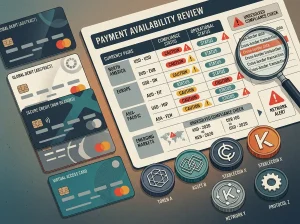
A practical framework for checking licensing, access limits, bonus wagering, withdrawals and the limits of player redress in Britain.
What “Offshore” Means in the UK Casino Market
“Offshore” describes the operator’s position outside the United Kingdom’s domestic gambling regulatory system. It does not, by itself, establish whether a casino may lawfully offer services to people in Britain. The key distinction is between where a company is based and whether it holds permission to serve the market.
In the UK context, a foreign casino is an online gambling operator that accepts British customers without a licence from the UK Gambling Commission (UKGC). The definition is about both the operator’s relationship with British customers and its regulatory status. A company being registered abroad is not enough on its own to make it an offshore casino in this sense; the relevant feature is that it takes customers from Britain without the required UKGC licence.
That distinction matters because a foreign address and a foreign licence are not substitutes for UK authorisation. A licence issued by an authority outside the UK may govern the operator in that authority’s jurisdiction. It does not grant permission to offer gambling services to customers in England, Scotland and Wales. For those markets, an online gambling operator must hold a Gambling Commission licence. Without one, offering its services there is illegal.
The word “offshore” can therefore obscure the operative question. It may sound like a description of distance, company registration or payment location. None of those details changes the market-access requirement. An operator can be based abroad, use a foreign brand or hold an overseas licence and still lack the authorisation required to serve British customers. Conversely, the label is not a reliable summary of every legal fact about an operator; the meaningful distinction is whether the UKGC licence is in place.
Non-UK-Registered Casinos: Licensing and Risks
This also explains why “UK offshore casino” is an awkward phrase. It can refer to a casino located outside Britain but accessible to people in Britain, rather than a casino regulated by the UK. In ordinary use, the phrase often points to the first situation: an overseas operator accepting British customers without a UKGC licence. The location is foreign; the customer relationship is British; the domestic operating permission is absent.
The operator’s physical presence and its intended market should not be treated as the same thing. A business may run its online service from outside the country, but if it offers gambling to customers in England, Scotland or Wales, its foreign base does not remove the licensing obligation. Equally, a website’s availability or its use of British-facing language does not itself prove that the operator has the appropriate licence. Those are separate questions from where the company is situated.
The legal boundary concerns the operator’s conduct, not the player’s address as a source of permission for the operator. In the named parts of Great Britain, a site without a Gambling Commission licence cannot lawfully offer its online gambling services. Calling that site “international”, “foreign” or “offshore” does not alter the rule. Those labels describe a business or its reach; they do not create an exception to the licensing requirement.
International Casinos for UK Players: Rules and Risks
For readers comparing claims about offshore online casinos in the UK, it helps to keep three ideas separate: the company’s location, any licence it holds outside Britain, and whether it has UKGC authorisation to serve British customers. Only the last answers the domestic permission question. A foreign licence may describe regulation elsewhere, but it should not be read as a UK operating licence.
“Best” or “top” in a site description is a promotional judgement, not a legal category. A ranking cannot turn an offshore operator into a UK-licensed one, and a polished British-facing website cannot supply a missing authorisation. The description “best offshore casinos” may group together sites with very different corporate locations and foreign regulatory arrangements, but it does not change the shared point relevant to the UK market: an operator accepting British customers without a UKGC licence is a foreign casino under this definition, and it is not authorised to offer services in England, Scotland and Wales.
The term is useful only when its limits are understood. It identifies a cross-border operator outside the UKGC system; it does not certify safety, legality for the operator, or equivalence with a UK-licensed service. The country in which a company is based answers where it operates from. The UKGC licence answers whether it has permission to offer online gambling to customers in the relevant British markets. Those are different entries in the ledger.
Attention: An operator based abroad with a foreign licence still requires a UKGC licence to lawfully serve customers in England, Scotland, and Wales.
How to Assess Offshore Casino Sites Without a UKGC Licence
A “best” label is not a regulatory status or proof that an operator has been independently checked. An offshore casino may hold a licence outside the United Kingdom, but it is not regulated by the UK Gambling Commission (UKGC). Those are separate facts: an offshore licence does not become a UKGC licence because a site accepts British customers or presents its credentials prominently.
That distinction limits what a comparison can establish. A ranking can describe features stated by operators, but it cannot turn those claims into UKGC-backed assurances. The same applies to phrases such as “trusted”, “safe” or “fully regulated”: their value depends on who issued the licence, what the licence covers and whether the claim can be checked against the relevant regulator’s records. A polished footer is presentation, not independent verification.
What a comparison can and cannot establish
A useful assessment separates observable information from conclusions. Published terms, account conditions and licensing statements can be read and compared. They do not, by themselves, demonstrate how a dispute would be handled or whether an operator would honour every term in a particular case. Nor does the presence of an offshore casino licence show that the UKGC supervises the operator. It does not.
The wording on a site should therefore be read precisely. “Licensed” is incomplete unless it identifies the licensing authority and the operator covered. “Regulated” is incomplete unless it makes clear by whom. An offshore casino licence may support a claim that the operator is licensed in another jurisdiction; it cannot support an implication that the site meets UKGC requirements.
Pay by Phone at UK Mobile Casinos: Costs and Limits
This matters when assessing offshore casino sites for UK customers. A comparison based only on welcome wording, game selection or a site’s own claims measures what is displayed, not the quality of regulatory oversight. It may help describe an offer or interface, but it does not establish equivalent protections to those available under UKGC regulation.
Affordability checks and account safeguards
The absence of UKGC regulation has a direct consequence for affordability checks: offshore operators do not have to carry out the checks mandated by the UKGC. A site’s decision to ask for financial information, or not to ask for it, should not be mistaken for evidence that it follows UKGC rules. The relevant distinction is the regulator’s remit, not the appearance of a particular account process.
That absence should be part of any assessment, rather than a footnote beneath a score. A comparison that weighs advertised features but leaves regulatory status out of the main picture assigns a price to visible convenience while omitting an important condition of use. In financial terms, the operator’s stated offer and the safeguards attached to it are separate entries; combining them into one headline rating conceals the difference.
Claims about security also need a narrow reading. A statement that a site uses encryption concerns the protection of data in transit or storage, depending on the specific claim. It does not establish UKGC oversight, nor does it show that the operator is subject to UKGC-mandated affordability checks. Technical language and regulatory status answer different questions.
Reading ratings and site claims
Scores and rankings are useful only when their basis is clear. A reader comparing the best offshore casinos should be able to tell whether a rating reflects independently checked information, operator-supplied descriptions or an editorial judgement. If the method is not explained, a precise-looking score adds little. A table can organise claims; it cannot validate them.
Do
- Separate observable information from conclusions
- Identify the specific licensing authority
- Check the regulator’s records independently
Don’t
- Treat a “best” label as regulatory proof
- Assume a polished footer is verification
- Mistake a site’s own claims for assurances
The same discipline applies to terms such as “top offshore casino sites” or “best offshore casino bonuses”. The label should not be treated as evidence that a site has passed a common regulatory test. The comparison needs to state the operator’s regulatory position plainly and distinguish it from the features being compared. Otherwise, the ranking risks making unlike things look equivalent: an offshore licence on one side, UKGC regulation on the other.
A practical assessment can therefore record, separately, what the operator says about its licence, what account conditions are published, and which claims have an identifiable basis. Unclear wording is not a minor editorial flaw when it obscures who regulates the operator. If a claim cannot be understood from its wording, it cannot carry much weight in a comparison.
For a UK-facing assessment, the central limitation is straightforward: offshore casinos are licensed offshore and are not regulated by the UK Gambling Commission. Any comparison of their features should preserve that distinction throughout. No rating, badge or promotional description changes the regulator responsible for the site, and no presentation can supply the UKGC-mandated affordability checks that do not apply.
Recommended online casinos
- JetsetspinsBonus: 200% Bonus + 100 Free Spins + Free Royal Wheel · Payout speed: 1-3 business days
- SlotoSportBonus: 500% up to £ 10 200+ 777 FS · Payout speed: 1-3 business days
- WinBeastBonus: €5000 + 500 FS + €650 Freebet · Payout speed: 1-3 business days
- DieselwinBonus: Welcome Pack 250% up to £4000 + 200 FS · Payout speed: 1-3 business days
- ChanzeBonus: Slots Welcome Bonus #1 200% up to €500 · Payout speed: 1-3 business days
- NightWinBonus: £900 + 400 free spins · Payout speed: 1-3 business days
- ZombillionBonus: Welcome Pack 250% up to £4000 + 200 FS · Payout speed: 1-3 business days
- AmunbetBonus: Join now and get 450% up to 2,700 GBP + 450 FS · Payout speed: 1-3 business days
Offshore Licences, Access Restrictions and Fast Payout Claims
An offshore licence identifies the authority under which an operator is licensed; it does not establish permission to serve customers in the UK. Remote gambling operators offering services to people in Great Britain need a UK Gambling Commission licence, regardless of where the business is based. A casino can therefore hold a licence abroad and still lack the authorisation required to operate in the British market.
Santeda illustrates the distinction. Its Curaçao authorisation does not extend to operating in the UK or the United States. The relevant question is not simply whether a licence exists, but what activity and territories that licence covers. A licence from an overseas authority is not a substitute for UKGC approval, and offshore casinos are outside the UKGC’s regulatory system.
Non-GamStop Curacao Casinos: UK Checks and Limits
Access restrictions are a separate issue from licensing. A block may be intended to prevent visitors from a restricted territory from using a site, but the existence of a block does not change the operator’s legal status. Gambling.com has reported that some casinos licensed outside the UK are meant to restrict access by British visitors, while some do not enforce that restriction; it also reports that a basic VPN can be used to get around a block. This is a report about access practices, not evidence that a site is authorised to serve UK customers. Circumventing a restriction does not create a UKGC licence.
That distinction matters when a site presents an offshore licence as reassurance. The licence may indicate oversight by the named foreign authority, but it does not bring the operator under UKGC rules or enforcement. Offshore casinos are not UKGC-regulated and do not provide UKGC-mandated affordability checks. A badge or statement about overseas licensing should therefore be read narrowly: it says something about the operator’s claimed regulatory basis, not about permission to operate in Britain or equivalent UK protections.
Licensing Risk
Offshore casinos are outside the UKGC regulatory system and do not provide UKGC-mandated affordability checks.
Fast payout claims require the same separation of questions. A licence does not, by itself, establish how quickly an operator approves or sends a withdrawal. Nor does a site being accessible from Britain verify its payout practices. The speed of a payment depends on the operator’s own processing arrangements and the applicable account checks; a headline promise is not a substitute for the terms governing withdrawals. Licensing and payout performance are distinct measures, and one cannot be inferred from the other.
For a UK-facing assessment, the useful checks are therefore specific: whether the operator holds the UKGC licence required to serve Great Britain, what territory its offshore licence covers, and whether access restrictions are stated and applied. A foreign licence may be genuine while still being insufficient for UK operation. An accessible website may remain unauthorised. And a fast-payout claim, however prominently displayed, says nothing on its own about either point.
Bonus Terms: The Cash Value After Wagering
A headline bonus is not the amount available to withdraw. For a deposit match, the useful calculation starts with the bonus credited and the wagering requirement attached to it. The requirement specifies how much must be staked in qualifying bets before bonus funds can become withdrawable. The deposit itself may not count, and the terms determine which wagers qualify.
A specialist review of foreign-casino promotions describes larger welcome packages as a feature of operators outside UK Gambling Commission restrictions on bonus terms, wagering requirements and promotional language. That is a reported comparison, not a guarantee that a particular offer is generous after its conditions are applied. Offshore operators are not regulated by the UKGC and do not provide the UKGC-mandated affordability checks.
Online Casino Sister Sites in the UK: How to Check
The arithmetic can make a large-looking offer less impressive. A 100% match on a £100 deposit adds £100 in bonus funds. At a 35x wagering requirement applied to the bonus, the calculation is £100 × 35, or £3,500 in qualifying stakes before the bonus converts to withdrawable cash. That figure is turnover, not a fee paid to the casino and not a promise that the balance will still be intact afterwards. Each qualifying bet exposes funds to the result of the game.
A smaller illustration gives the same rule in clearer scale: a £20 bonus at 35x requires £700 in qualifying bets before cash-out. The requirement does not mean that £700 must be deposited. It means the stated amount must pass through eligible wagers. The distinction matters because a bonus can be described as free while carrying a substantial turnover condition.
Specialist reviews of foreign-casino offers also identify deposit matches, free-spin packages, no-deposit bonuses and cashback as recurring formats. The label alone does not establish the cash value. For a deposit match, the central figures are the bonus amount, the wagering multiple and the definition of eligible play. Cashback needs its own terms; a percentage or credit described as cashback cannot be treated as withdrawable cash without checking how it is issued and what conditions attach.
A no-deposit promotion is a separate format from a deposit match: no initial deposit is required to receive the stated offer, but that does not make its balance immediately cashable. Its turnover rules and withdrawal conditions determine whether any amount can be released. The detailed mechanics of free spins are a separate calculation.
Before assigning value to any offshore casino bonus, the terms should be read as a sequence: what triggers the offer, which funds the wagering applies to, which bets qualify, and what happens when the requirement is complete. If one of those conditions is unclear, the advertised figure cannot be treated as a cash equivalent. The bonus is packaging; the turnover requirement is the price of access.
Bonus Value Calculation
Step 1: Identify the bonus and requirement
A £20 bonus is credited with a 35x wagering requirement.
Step 2: Calculate total qualifying stakes
Multiply the bonus by the requirement: £20 × 35 = £700.
Step 3: Determine the cash-out threshold
Only after £700 in qualifying bets are placed can the bonus funds become withdrawable cash.
Licensing Risk, Failed Payouts and the Limits of Redress
The financial risk of an offshore casino is not limited to losing a bet. A separate exposure arises when a balance is shown on an account but the operator does not release it. Gambling.com has reported cases in which unlicensed sites refused to pay winnings, leaving customers with no legal recourse. That is a reported outcome, not a claim that every offshore operator withholds funds; it is enough to show that a displayed balance is not the same as cash in hand.
The regulatory distinction matters when a dispute occurs. Offshore operators are not regulated by the UK Gambling Commission, and UKGC enforcement does not apply to them. A customer therefore cannot assume that the protections attached to a UKGC-licensed account are available when an offshore operator makes a decision about a withdrawal. The operator’s own rules may describe a complaint route, but that does not make it a UKGC process.
Nor does the presence of an offshore licence settle the UK question. A licence issued elsewhere does not authorise an operator to provide gambling facilities to customers in Great Britain. It is illegal for an operator without a UKGC licence to offer those facilities to UK customers or advertise its services in the UK. The operator’s legal position and the customer’s practical ability to recover withheld winnings are distinct matters: the restriction falls on the operator, while the reported loss falls on the customer.
Non-GamStop European Casinos: UK Rules Explained
This is why an offshore casino list, even when it names a licensing authority, cannot be treated as a list of UK-authorised businesses or a guarantee of redress. A licence label may identify where an operator is regulated; it does not, by itself, establish that UKGC oversight applies or that a customer can recover funds after a dispute. The distinction is material because an account balance can be disputed precisely when the operator controls the account and payment process.
There is also no UKGC-mandated affordability check at an offshore casino. Without that requirement, the operator is not subject to the same UKGC framework on affordability. That is a protection difference, not a minor administrative detail.
The relevant calculation is therefore not simply the possible win minus the stake. It also includes the amount that could remain inaccessible if a payout is refused, and the fact that UKGC regulation and enforcement are not available to resolve the matter. Where winnings are withheld and the customer has no legal recourse, the nominal balance has no recoverable value.
Withdrawal Methods, Processing Times and Pending Periods
The time between requesting a withdrawal and receiving the funds depends on both the payment rail and the casino’s own processing rules. An offshore casino withdrawal can therefore have two separate stages: the operator reviews and releases the request, then the payment provider or banking system completes the transfer. A fast payment method does not remove the operator’s part of that process.
Skrill and Neteller are the e-wallet options for which the stated timelines are most specific. Most foreign casinos are reported to clear withdrawals through these services within 24 hours, with many processing them in under 12 hours. These timings describe casino processing, not a universal promise that funds will appear in every account by a fixed point. The operator’s pending period and any account checks can affect when a request moves on to payment.
E-wallets (Skrill/Neteller)
Reported processing often takes under 12 to 24 hours.
Bank Transfers
Typically the slowest route, often taking five to seven business days.
Cryptocurrency
Reported to be the fastest, often clearing in under an hour.
Bank transfer is the slower route in a specialist review’s comparison: it often takes five to seven business days, and some casinos add an internal processing delay before the banking timeline begins. The business-day count and the casino’s queue are separate considerations. A request submitted for review may not yet be moving through the banking system, so the quoted transfer period alone may understate the elapsed time.
A specialist review also reports that crypto withdrawals at foreign casinos often clear in under an hour, making them faster than fiat methods in that comparison. Speed comes with a different calculation: the value of the cryptocurrency can change between withdrawal and conversion or use. The amount received in pounds may therefore differ from the value expected when the withdrawal was requested. Processing speed and value stability are not the same measure.
Withdrawal limits, pending periods and verification procedures vary considerably by operator. The terms attached to the account are therefore part of the payment method’s practical cost: a short transfer estimate is of limited use if the request sits pending under the casino’s own rules. UKGC-licensed operators must verify a player’s identity before processing withdrawals; that requirement should not be assumed to govern casinos outside the UKGC system. Offshore operators are not regulated by the UK Gambling Commission and do not provide its mandated affordability checks.
A comparison should record the operator’s processing window separately from the provider’s transfer time, along with any stated withdrawal limit, pending period and verification condition. If those conditions are not clear, a headline claim about speed cannot establish when the funds will arrive. The payment route may be quick; the full withdrawal is only as quick as its slowest stage.
Casino App UK Guide: Mobile Features and Checks
Casino Games and Chargebacks: What the Available Evidence Supports
Game names and variety say little about the financial terms attached to a casino account. A catalogue may describe what can be played, but it does not establish whether a withdrawal will be honoured, what rules apply to a disputed balance or which body can compel an operator to act. Those are separate questions from the games themselves.
In the UK market, “offshore” describes an operator outside the UK Gambling Commission’s regulatory system. A site serving British customers without a UKGC licence is not subject to UKGC regulation, including its required affordability checks. The label does not, by itself, tell a customer how a particular game works or whether a particular payment dispute can be resolved.
A chargeback is a request for a payment provider to review a transaction; it is not a guaranteed route to recovering casino funds. Whether a provider will consider a claim, what evidence it requires and what decision it reaches are matters for that provider and the circumstances of the payment. A chargeback request also does not create a regulator’s power over an offshore operator or establish that winnings are owed.
That distinction matters where the dispute concerns a payout rather than an unauthorised payment. A report by gambling.com says that some unlicensed sites have refused to pay winnings, leaving customers without legal recourse. The practical point is not that every offshore operator behaves this way, but that a customer may have no effective route to enforce a claim if the operator withholds funds. A payment dispute process should not be treated as a substitute for enforceable regulatory oversight.
A chargeback is a request for a payment provider to review a transaction; it is not a guaranteed route to recovering funds or a substitute for regulatory oversight.
Game-specific questions need the same care. A title’s presence in a casino lobby does not prove that its rules, return or operation have been independently checked. Nor does a familiar game format resolve what happens to an account balance when an operator disputes a withdrawal. The game and the operator’s obligations are different parts of the transaction.
A transaction funded by credit card is not a lawful workaround in Britain: remote gambling operators cannot accept credit-card payments for gambling, including card funding routed through a money service business. That restriction does not establish that a chargeback will succeed for another payment type. The outcome remains dependent on the payment provider’s review, while the site’s offshore status leaves it outside UKGC oversight.
The financial comparison is therefore not between one game and another. It is between a documented payment route and a claim against an operator that may not be answerable to the UK regulator. A chargeback can be requested; recovery cannot be assumed.
A UK Player’s Legal Position and Tax on Winnings
The legal position of the player is separate from the legal position of the operator. A British resident does not commit an offence simply by placing a bet with a casino licensed outside the UK. UK law does not prohibit an individual from betting with an overseas gambling operator, and the player faces no criminal penalty for doing so.
That does not make the operator’s activity lawful. A remote gambling business offering services to customers in Great Britain must hold the relevant licence from the UK Gambling Commission. Without that licence, the operator cannot lawfully provide gambling facilities to those customers. The obligation falls on the business, not on the player who places a bet.
The distinction matters when considering an offshore casino serving UK customers. A foreign licence may authorise an operator under the rules of another jurisdiction, but it does not replace the UKGC licence required to serve the British market. Equally, the operator’s failure to meet that requirement does not turn the customer’s bet into a criminal offence. These are separate questions, with different parties responsible.
Tax treatment is also separate from licensing. Gambling winnings are not subject to UK income tax, whether they come from a UKGC-licensed casino or an operator licensed elsewhere. The operator’s regulatory status does not change that stated treatment of winnings. Tax-free winnings, however, do not establish that the service itself is authorised in Britain; the tax position and the operator’s licensing obligation answer different questions.
For anyone comparing what may be described as the best offshore casino in the UK, the phrase does not settle either legal issue. A player may not be committing an offence by betting, while the operator may still be acting unlawfully by providing gambling facilities without a UKGC licence. Nor does the absence of player criminal liability amount to UKGC oversight of the casino. The relevant distinction is straightforward: the law places the licensing requirement on the operator, while UK income tax does not apply to gambling winnings.
Free Spins and the Turnover Behind a No-Deposit Offer
Free spins and no-deposit bonuses change the point at which money enters the calculation; they do not make the terms irrelevant. A free-spin offer may produce winnings subject to conditions, while a no-deposit bonus may place bonus funds in an account without an initial payment. In either case, the amount displayed is not necessarily the amount available to withdraw.
Common Promotional Formats
Specialist reviews of foreign casinos identify several recurring formats:
- Deposit matches
- Free-spin packages
- No-deposit bonuses
- Cashback
A specialist review of foreign casinos serving UK players identifies deposit matches, free-spin packages, no-deposit bonuses and cashback as common promotional formats. That describes the range, not a guarantee that a particular offer is available or that its proceeds are withdrawable without further conditions. The terms attached to the individual promotion determine what counts as qualifying play and when any resulting balance can be cashed out.
The arithmetic matters most when wagering applies. A specialist review gives the example of a £20 bonus with a 35x wagering requirement: qualifying bets must total £700 before cash-out. That is turnover, not a £700 loss by definition, but every stake is exposed to the outcome of play. A no-deposit offer can therefore carry a substantial play-through condition even though no initial deposit was required. Free spins should be assessed by the same distinction: the advertised spins are not equivalent to withdrawable cash, and any wagering condition on resulting winnings changes their practical value.
Before valuing an offer, the relevant terms are the wagering basis, which funds or winnings count, the games that qualify, any expiry condition and the point at which withdrawal becomes possible. If those conditions are unclear, the headline number cannot support a reliable cash valuation. A larger-looking offer may simply impose more turnover or tighter conditions; the calculation starts with the rules, not the promotional label.
Offshore casinos are not regulated by the UK Gambling Commission, and they do not provide UKGC-mandated affordability checks. A promotion’s value should not be confused with the protections attached to a UKGC-licensed operator. Free spins and no-deposit funds are conditional promotional balances until the operator’s terms allow withdrawal; without that distinction, the displayed amount is packaging, not a cash figure.
Offshore Operators, Crypto Withdrawals and Self-Exclusion
Crypto can shorten the time between an offshore casino approving a withdrawal and the funds arriving. A specialist review reports that crypto withdrawals at foreign casinos can clear in under an hour, faster than fiat methods. That is a reported outcome, not a service standard: processing rules remain the operator’s decision, and a quick transfer does not establish that a payout will be approved promptly.
USA Casinos for UK Players: Licensing Explained
The amount received also has a moving value. Cryptocurrency prices can change while funds are being processed or held in a wallet, so the value after conversion to pounds may differ from the value at the point of withdrawal. Speed and certainty are separate measures; a rapid transfer does not remove exchange-rate risk.
An offshore crypto casino is also outside the UK Gambling Commission’s regulatory system if it lacks a UKGC licence. Operators serving customers in Great Britain must hold the relevant Commission licence. Offshore operators do not provide UKGC-mandated affordability checks, and their use of crypto does not alter that regulatory position. A crypto payment option should therefore not be read as evidence of UK authorisation or equivalent player protections.
Self-exclusion presents a more direct distinction. GamStop covers all UKGC-licensed operators: once a person registers, they are excluded from every UK-licensed gambling site. Foreign casinos outside the Commission’s remit are not covered by GamStop, so the exclusion does not automatically block access to them. A specialist review describes registration and depositing at a foreign casino after GamStop exclusion as possible within minutes, without the safeguards attached to the scheme. That is a reported possibility, not a protection or endorsement.
The practical effect is that a person seeking a complete break from online gambling cannot treat GamStop as a universal block across offshore operators. Its coverage is tied to UKGC-licensed sites. Offshore sites are not required to participate, and the absence of a shared exclusion mechanism removes one control that applies across the licensed market.
Crypto therefore changes the payment rail, not the operator’s status or the scope of self-exclusion. A short reported transfer time comes with value volatility, while GamStop’s reach stops at the boundary of UKGC licensing. Those are separate conditions, neither of which is cancelled by the other.
Is it legal for UK residents to use casino sites that operate outside the UK’s licensing framework?
Yes, playing at an overseas casino is not illegal for a British player. However, an operator without a UKGC licence cannot lawfully offer gambling services to customers in England, Scotland and Wales.
How long do withdrawals take at the listed operators?
Times vary by operator and payment method. E-wallet withdrawals often clear within 24 hours, bank transfers can take five to seven business days, and crypto withdrawals at foreign casinos often clear in under an hour.
Can I play at a casino licensed outside the UK?
Yes, there is no UK law prohibiting an individual from betting with an overseas operator. That does not make the operator authorised to offer services in England, Scotland and Wales without a UKGC licence.
What does wagering requirement actually mean in practice?
It is the amount you must bet on qualifying games before bonus funds can be withdrawn. For example, a 35x requirement on a £20 bonus means placing £700 in qualifying bets.
Can I use cryptocurrency at foreign casinos from the UK?
Yes, some foreign casinos offer crypto payment options. Crypto withdrawals at foreign casinos often clear in under an hour, though the value can fluctuate.
What is the fastest way to withdraw from an online casino in the UK?
E-wallets are consistently the fastest withdrawal option on the UK market, with most operators processing them within 24 hours.
Are gambling winnings subject to income tax in the United Kingdom?
No. Gambling winnings are not subject to income tax in the UK, whether the operator is UKGC-licensed or not.
Prepared by the Dreams Casino UK Guide editorial staff.