GamStop applies across participating UKGC-licensed operators, while non-UK sites sit beyond its network and do not apply its exclusions.
What “Outside GamStop” Means in Practice
GamStop is a self-exclusion service linked to the UK Gambling Commission’s regulatory system. When a person registers, participating gambling establishments must prevent that person from gambling with them. UKGC-licensed operators are required to take part, so the exclusion applies across those operators rather than only at the site where registration began.
The boundary matters. A casino described as “outside GamStop” is not an operator that has been granted an individual exemption from a person’s registration. It is outside the service’s participating network because it operates beyond the UK Gambling Commission’s regulatory reach. Non-UK casinos do not share player data with GamStop and do not apply GamStop exclusions. The exclusion therefore does not carry across to those sites.
That distinction explains why searches for casinos that bypass GamStop 2026 point to a difference in coverage, not a way to cancel or alter an active exclusion. The service works within its participating system; it does not create a universal block across every gambling website operating internationally. A site’s failure to recognise the registration is not evidence that the registration has ended or that the site provides an equivalent safeguard.
For someone who has chosen self-exclusion, this gap should be treated as a risk, not as a practical workaround. Registering elsewhere can expose a person to gambling while the original restriction remains in force at participating operators. The service’s purpose is to support a decision not to gamble, and seeking out sites that do not apply that decision cuts against it.
What the label does—and does not—tell anyone
“Casinos not on GamStop” is a description of an operator’s relationship with the service. It says that the casino does not participate in GamStop’s data-sharing and exclusion arrangements. It does not establish that a site has assessed a particular player’s registration and approved an exception. Nor does it show that the casino offers safeguards equal to those required within the UKGC framework.
The same distinction applies to non-GamStop casinos UK and online casinos not on GamStop UK as phrases used in ordinary discussion: they refer to sites that may be accessible from the UK but do not apply GamStop’s restrictions. The label alone does not establish the site’s regulatory status, its terms, or the consumer protections available there. Those are separate questions, and the absence of a GamStop block answers none of them.
USA Casinos for UK Players: Licensing Explained
Outside the UKGC framework, responsible-gambling measures may not be mandatory. A non-UK casino may not provide the same protections as a UKGC-licensed operator, and the availability of UK-based player support services may also be limited. A site’s own controls, where offered, are not the same as GamStop’s shared exclusion mechanism. Similar-sounding tools do not necessarily have the same reach or effect.
The exclusion remains in place where it applies
GamStop’s coverage does not depend on whether a person can find a website that does not check the service. At participating UKGC-licensed operators, the registration remains the relevant restriction. Access at a non-participating casino does not remove it from the GamStop system or restore access at participating sites.
This is why “outside” should be read literally and narrowly: outside the network’s coverage. It is not a judgement that a casino is safe, suitable, or interchangeable with a UKGC-licensed site. Nor is it a sign that an active self-exclusion has been formally lifted. The operator’s position and the player’s registration are different things.
A comparison framed around the best non-GamStop casinos can obscure that central point. A ranking cannot change whether a site participates in GamStop, and a prominent claim about access does not make the exclusion less active elsewhere. For a person who registered to stop gambling, using non-participating sites defeats the practical protection that the registration was intended to provide.
The meaningful distinction is therefore between participating operators, which must apply GamStop restrictions, and non-UK operators outside the UKGC’s reach, which do not share its exclusion data or implement those restrictions. “Outside GamStop” describes that regulatory and data-sharing boundary; it does not describe a separate route for ending self-exclusion.
How Non-GamStop Sites Sit Outside the UK Framework
The distinction is between the rules governing a gambling operator and the legal position of an individual player. A casino may be registered or licensed in another jurisdiction, but that does not give it permission to offer online gambling to customers in Great Britain. For an operator serving that market, a UK Gambling Commission (UKGC) licence is required. A licence issued elsewhere does not replace it.
Legal Status
If an operator offers online gambling to UK residents without a valid UKGC licence, it is acting illegally as an operator.
That boundary can be obscured by phrases such as “licensed casino” or “regulated site”. Those statements may refer to a regulator outside the UK, not to the authority responsible for gambling operators serving Great Britain. A non-UK licence may impose conditions under its own system, but it does not bring the operator within UKGC rules or make its services equivalent to those of a UK-licensed casino.
A site can therefore have a licence in a place such as Malta, Gibraltar or Curacao and still lack the UKGC licence required to serve customers in Great Britain. The location of the operator and the regulator named on its website do not change that requirement. The relevant point is whether the operator holds the licence required for the market it is targeting.
The operator’s status and the player’s position
For a UK player, using a non-GamStop site is not itself a criminal offence. That does not mean the operator is entitled to provide the service. If an operator offers online gambling to UK residents without a valid UKGC licence, it is acting illegally as an operator. The player’s position and the company’s obligations are separate questions; treating them as one produces a misleading account of the law.
This distinction matters when a site presents its availability to UK customers as proof of approval. A website being accessible, accepting registrations or displaying another jurisdiction’s licence does not establish that it is authorised to serve the British market. Access is not the same as UK regulatory status.
The UKGC framework also determines which operators must participate in GamStop. UKGC-licensed operators are required to take part in the self-exclusion scheme. A casino outside that framework is not obliged to apply a GamStop registration, because it is not regulated by the UKGC. The absence of a block is therefore not an exception granted within GamStop; it reflects the operator’s position outside the system.
That difference has a practical cost. Non-GamStop casinos do not provide the consumer protections associated with a UKGC licence. A foreign regulator may set requirements of its own, but a player cannot assume those requirements match the protections imposed in Great Britain. Voluntary limits or reminders, where an operator offers them, do not turn the site into a UKGC-regulated service.
UK-based routes for support may also be unavailable through an operator outside the UK framework. The site’s own customer service is not the same as access to support associated with the British regulatory system. The distinction should be included in any assessment of the service, rather than treated as a minor detail alongside payment methods or account features.
What a foreign licence does—and does not—show
A licence from another jurisdiction indicates a regulatory relationship there. It does not confirm that the operator has permission to target customers in Great Britain, nor does it establish that a UK player receives UKGC-level safeguards. The word “licensed” is incomplete unless the regulator and the market covered by that licence are clear.
This is why a non-GamStop online casino can appear to have formal oversight while still sitting outside the UK framework. Its rules, complaint routes and protections may be governed elsewhere; the UKGC’s requirements do not automatically follow the operator across borders. A foreign licence is not a substitute for checking whether the operator holds the licence required to serve the British market.
Licensing Facts
A licence from another jurisdiction, such as Malta, Gibraltar or Curacao, does not confirm that the operator has permission to target customers in Great Britain.
The same applies to the label “casinos not on GamStop”. It describes a relationship to the self-exclusion service, not a quality mark or a statement of UK approval. It does not mean that the casino has been assessed by GamStop, exempted from UKGC rules, or cleared to operate in Great Britain. It says only that the operator is not participating in the scheme.
The financial comparison is consequently not just about the terms shown on an account page. It includes the regulatory position behind those terms: which authority oversees the operator, whether the UKGC has licensed it for the British market, and which consumer protections are actually available. A site may state conditions plainly and still offer less recourse than a UKGC-licensed casino. Presentation is not protection.
For UK residents, the careful reading is straightforward: a player is not committing a criminal offence merely by using a non-GamStop site, but that does not make the operator’s service lawful in Great Britain. Where a casino serves UK customers without a UKGC licence, the operator is outside the legal route required for that market. Its foreign licence, if it has one, does not erase the difference or provide the same UK protections.
Recommended online casinos
- JetsetspinsBonus: 200% Bonus + 100 Free Spins + Free Royal Wheel · Payout speed: 1-3 business days
- SlotoSportBonus: 500% up to £ 10 200+ 777 FS · Payout speed: 1-3 business days
- WinBeastBonus: €5000 + 500 FS + €650 Freebet · Payout speed: 1-3 business days
- DieselwinBonus: Welcome Pack 250% up to £4000 + 200 FS · Payout speed: 1-3 business days
- ChanzeBonus: Slots Welcome Bonus #1 200% up to €500 · Payout speed: 1-3 business days
- NightWinBonus: £900 + 400 free spins · Payout speed: 1-3 business days
- ZombillionBonus: Welcome Pack 250% up to £4000 + 200 FS · Payout speed: 1-3 business days
- AmunbetBonus: Join now and get 450% up to 2,700 GBP + 450 FS · Payout speed: 1-3 business days
Why a Non-GamStop Casino May Not Block Access
GamStop’s restriction is not a technical lock on every form of gambling. It applies across participating establishments, so a casino that does not cooperate with the service may not receive the exclusion record and may not block an account on that basis. This explains how access can continue elsewhere; it does not change the exclusion or make another route a safe substitute for it.
A person who has registered with GamStop selects an exclusion period of six months, one year or five years. That choice cannot be shortened or cancelled before the selected period ends. In practical terms, opening an account with an establishment outside the scheme does not lift the original restriction. It means only that the other establishment may not apply it.
This distinction matters when a search leads to a casino not on GamStop. The label describes a site’s relationship with the exclusion service, not an exception granted to an individual or a change in the person’s status. A non-participating casino may therefore allow registration even while a GamStop exclusion remains active. The account can be separate; the exclusion remains in force at participating operators.
Routes described as ways around the block
The clearest route is registering with a gambling establishment that does not cooperate with GamStop. Because it does not take part in the scheme, that establishment may not use GamStop’s data to prevent access. This is the basic reason a non-GamStop casino UK search can return sites that appear available to someone who has self-excluded. Availability is not evidence that the exclusion has ended, nor is it an endorsement of using the site.
A report by neconnected.co.uk also describes attempts to register using another person’s personal data, or to use anonymising tools such as a virtual private network, proxy or TOR browser. These are reported methods, not reliable or recommended solutions. Using another person’s details raises identity and account-ownership problems; anonymising a connection does not cancel a self-exclusion either. Such approaches can add complications without changing the underlying restriction.
Attention: Using another person’s personal data or anonymising tools like a VPN or TOR browser to access gambling sites does not cancel a self-exclusion and can add complications.
Some accounts of access outside GamStop also refer to gambling in land-based establishments or waiting until the selected exclusion period expires. Waiting is different from trying to bypass the restriction: the GamStop record remains active until the chosen period has run its course. The key point is that no route elsewhere can shorten or cancel that period.
The word “access” can conceal several separate questions. A website might accept a registration, but that alone does not establish that every service will remain available, that an account will be accepted after checks, or that the site provides protections equivalent to those attached to participation in GamStop. A route that appears to work at the point of sign-up is not proof that the exclusion has been reversed.
Why the distinction should not be treated as a workaround
An active exclusion is a boundary chosen to prevent gambling through participating establishments. Looking for an establishment that does not recognise the record may defeat the practical purpose of that boundary, even though the record itself remains unchanged. The distinction is procedural, not protective: one system can still apply the exclusion while another does not see it.
That is why “the site let the account open” is an incomplete measure. It says nothing about whether the route supports the original decision to stop, and it does not restore the block across the wider set of participating operators. The remaining exclusion period is still the controlling condition for GamStop members.
Searches for a non-GamStop casino UK or a UK casino not on GamStop can make the issue sound like a choice between interchangeable account options. They are not interchangeable from the perspective of self-exclusion. A participating operator applies the GamStop restriction; a non-participating establishment may not. The difference lies in whether the establishment cooperates with the scheme, not in whether the person’s exclusion is valid.
There is also a practical difference between an exclusion that has reached its end date and an attempt to get around it while it is active. The former follows the selected period; the latter leaves that period untouched. No registration elsewhere, altered connection or third-party details can bring the selected end date forward.
For someone searching for the best non-GamStop casino while an exclusion is active, the immediate issue is not which site appears easiest to access. It is that bypassing the block conflicts with the purpose of the self-exclusion, while offering no way to cancel it. If gambling is becoming difficult to control, continuing to seek access can increase exposure rather than resolve the underlying problem.
What “Best” Can—and Cannot—Mean for Non-GamStop Sites
A ranking of the best non-GamStop casino sites would imply that the entries share a reliable standard of protection. They do not. A comparison can establish what an operator says it offers and what its terms require; it cannot turn a casino operating outside the UK Gambling Commission’s framework into the equivalent of a UKGC-licensed site.
A more useful test is whether the stated conditions are specific and usable. Deposit and loss limits should be described clearly, including how they are set and what happens when they are reached. Session time limits and reality checks may help make time and spending visible, but their presence alone says little about how consistently they work. A specialist review may report that some non-UK casinos offer these controls voluntarily, along with self-exclusion and reminders. That is a report about possible features, not a guarantee that every operator provides them or applies them in the same way.
Do
- Check for specific and usable deposit and loss limits
- Look for clear descriptions of session time limits and reality checks
- Verify if rules are easy to find before registration
Don’t
- Rely on the label “best” without observable terms
- Assume a voluntary control is a dependable safeguard
- Equate a menu of limits with UKGC-level oversight
The distinction is material. UKGC-licensed operators must participate in GamStop. Non-UK casinos are not bound by that requirement and may not provide the responsible-gambling tools that are mandatory within the UK system. A control described as voluntary depends on the operator’s own arrangements; it is not evidence of equivalent oversight or consumer protection. A menu of limits is not the same thing as a dependable safeguard.
Compare conditions, not labels
The word “best” is only useful when the comparison is tied to observable terms. Relevant points include whether the site explains its limits, how account restrictions are handled, and whether the rules are easy to find before registration. Vague statements about responsible play carry less weight than clear descriptions of what a control does. Even clear wording, however, remains an operator’s stated policy rather than proof of UKGC supervision.
A top-rated list can also conceal the basis of its ranking. A score may reflect presentation, bonuses or payment options rather than the strength of player protections. Without a transparent method, an ordered shortlist gives an appearance of precision without showing what was measured. That is a poor basis for a decision involving money.
For UK players, the phrase “best non-GamStop casino sites UK” does not identify a safer category. It describes sites that do not participate in GamStop, not sites approved by the UK regulator. Playing at such a site is not itself a criminal offence for the player, but consumer protections associated with a UKGC licence are absent. UK-based support services should not be assumed to be available either. Any support channel advertised by an operator is separate from access to UK support provision.
What a comparison can establish
A careful comparison can record which safeguards an operator says it offers and whether its terms explain them. It can also distinguish an advertised feature from a legal requirement. It cannot establish that a site is safe, that a voluntary limit will work like a regulated one, or that a ranking makes the operator suitable for someone with an active self-exclusion.
For anyone registered with GamStop, a list of unrestricted online casinos is not a workaround to recommend. GamStop exclusions cannot be shortened or cancelled before the selected period ends. Voluntary controls at a non-participating casino do not change that position or recreate the protection of an exclusion applied across participating UK-licensed operators.
So “best” can mean only the clearest stated conditions within a group of sites outside the UKGC system. It cannot mean best protected, UK-approved, or interchangeable with a UKGC-licensed casino. The distinction is less attractive than a ranked list, but more informative.
Licences on European and Offshore Casino Sites
A casino described as European or international may hold a licence issued outside the United Kingdom. Malta, Gibraltar and Curacao are examples of jurisdictions in which non-UK casinos may be licensed. The location of the regulator matters: a licence from one of these places is not a UK Gambling Commission licence, and the label “licensed” does not, by itself, establish the protections attached to the UK framework.
The distinction is practical, not cosmetic. A licence issued elsewhere may mean the operator is subject to that jurisdiction’s rules, but it does not make the casino part of the UKGC system. Casinos licensed abroad are not required to connect to GamStop. A GamStop registration therefore does not become enforceable at such a site simply because it displays a licence from another country.
Common Non-UK Jurisdictions
Malta, Gibraltar and Curacao are examples of jurisdictions in which non-UK casinos may be licensed, meaning they are not required to connect to GamStop.
Nor does the word “regulated” settle the question of consumer protection. The relevant regulator and the protections it requires are separate matters. A foreign licence does not establish that responsible-gambling measures, complaint handling or player support are equivalent to those available through a UKGC-licensed operator. Non-UK casinos operate outside the UKGC framework and may lack its mandatory safeguards; UK-based support services may also not be available through them.
This is particularly important when the licence is from a less established gambling authority. The presence of a licence should not be treated as proof of UK-level oversight or as a guarantee that disputes will be handled under the same rules. A licence claim and the practical remedies available to a player are not interchangeable.
For a Curacao-licensed or other overseas site, the licence is therefore a statement about the jurisdiction named, not evidence of UKGC status. It also does not alter the fact that the operator is outside GamStop’s arrangements. These distinctions do not make an overseas licence meaningless; they define what it can and cannot establish. The key point is that a foreign licence cannot, on its own, support a comparison with UKGC protections.
When a Casino Is Described as Outside GamStop
“Outside GamStop” describes an operator’s relationship with the UK regulatory system; it does not mean that GamStop has granted an individual casino an exemption. The service applies to casinos within the UK Gambling Commission’s jurisdiction. An operator beyond that reach does not become part of the scheme simply because its website accepts visitors from the UK or uses similar wording in its own description.
The practical distinction is about participation and data. Non-UK casinos operating outside the Commission’s regulatory reach do not share player data with GamStop and do not apply its exclusion measures. A GamStop registration therefore does not create a block across every gambling website. The label identifies that boundary; it is not a separate status attached to a particular player or account.
This is why descriptions such as “casino outside GamStop” can be imprecise. They may sound like a technical category or a formal approval, but the relevant point is whether the operator falls within the UKGC framework and participates in the scheme. “Outside” does not mean that the site has been checked or endorsed by GamStop, nor does it establish that its own controls match those of a UKGC-licensed casino.
The distinction also matters for protection. Casinos not on GamStop operate outside the UKGC framework and may lack mandatory responsible-gambling tools that apply to licensed operators. Any limits, reminders or exclusion options offered by an individual site should not be read as equivalent to GamStop participation. The scheme’s data is not being shared with that operator, so its exclusion status cannot be assumed to carry across.
The same boundary affects support. A player using a site outside the UK system should not assume that UK-based gambling support services can intervene in the operator’s account or enforce an exclusion there. The operator’s own policies and procedures are separate from GamStop’s records.
In short, “outside GamStop” is a description of the operator’s regulatory and data-sharing position, not a protection, licence or exception for a player. The wording may be brief; the difference it signals is structural.
UK Players, Eligibility and the Operator’s Licence
GamStop eligibility and an operator’s right to serve the British market are separate questions. GamStop is available to UK residents. Registering with it restricts access to participating gambling establishments for the selected exclusion period; it does not determine whether a non-participating casino is legally entitled to accept a customer.
That distinction matters when a site is described as a non-GamStop casino accepting UK players. A person’s ability to reach a website, create an account or place a bet is not evidence that the operator may lawfully provide gambling services in Britain. Online operators serving customers in Great Britain must hold the relevant UK Gambling Commission licence. A licence issued elsewhere does not replace that requirement.
UK players are not committing a criminal offence merely by playing at a site without a UKGC licence. The regulatory issue rests with the operator: offering online gambling to UK residents without the required licence is illegal for the operator. The absence of player criminal liability does not turn the operator’s activity into a lawful service, or provide the protections attached to a UKGC-licensed account.
Searches for casinos accepting UK players that are not on GamStop can therefore describe two different things: sites that do not participate in the exclusion scheme, and sites whose licensing status permits them to serve British customers. Those categories should not be treated as interchangeable. A site may be accessible and may hold a licence from another jurisdiction, yet still lack authorisation to target or serve the British market.
For a UK resident, GamStop access is a personal eligibility matter. For a casino, permission to offer real-money online gambling to British customers is an operator-licensing matter. Checking only whether registration is possible answers neither whether the operator holds the required UKGC licence nor whether the service is operating lawfully in the market. Nor does being outside GamStop create an exemption from British licensing rules.
The practical distinction is narrow but decisive: a player’s access is not the test of an operator’s legal status. A non-GamStop label describes participation in an exclusion scheme; it does not certify that the casino is authorised to accept UK customers.
How to Read a Non-GamStop Casino Review
A review is useful when it separates an operator’s stated terms from protections that are legally required. It is not proof that a site is safe, nor a substitute for the safeguards attached to a UK Gambling Commission licence. Casinos not on GamStop operate outside that framework, so protections available through UK-licensed operators cannot be assumed.
Playing at a non-GamStop site is not a criminal offence for a UK player. That does not make the operator equivalent to a UK-licensed casino: the consumer protections associated with a UKGC licence are absent. A review should make this distinction explicit rather than letting a list of features stand in for regulatory status.
The wording around safer gambling needs particular care. Some specialist reviews report that certain non-UK sites offer deposit limits, self-exclusion or reminders, while noting that their regulators may not require those measures. These are claims about particular operators, not evidence of a consistent standard. A review should identify whether a tool is described in the operator’s terms, how it is activated, and what happens when it is used. The presence of a limit or reminder does not establish that it is independently enforced or comparable to a UK requirement.
Reviewing a Casino
- Identify the operator’s regulatory position
- Distinguish claimed features from mandatory protections
- Check if terms for limits and exclusions are explicitly stated
- Confirm the availability of support channels
- Disclose any commercial relationships behind the review
Reviews should also make clear what they have actually checked. An operator’s own description is not the same as an independently confirmed condition; unclear or missing terms leave the practical position uncertain. Any commercial relationship behind a review should be disclosed, since payment or referral arrangements can affect how prominently drawbacks are presented.
A careful assessment therefore reads like a record of conditions, not a verdict. It states the site’s regulatory position, distinguishes claimed features from mandatory protections, and avoids treating “available” as “effective”. It should also flag that UK-based support services may not be accessible through the operator. A favourable rating cannot replace those details, and a polished presentation cannot supply protections that sit outside the UK framework.
Offshore Sites: Bonus Terms and the Real Cost
A bonus headline is not its cash value. The relevant figure is the amount that can be withdrawn after the wagering condition, eligible-game rules and any payout cap have been applied. Terms vary by offer, so benchmarks are not promises about any unnamed casino.
A specialist review describes wagering requirements of 30x to 40x as an industry average and requirements above 50x as generally predatory. These are review benchmarks, not a guarantee of what an offshore casino not on GamStop will offer. The multiplier applies to the amount specified in the terms, which may be the bonus alone or the bonus plus the deposit. That distinction changes the wagering total before a single game is played.
Game weighting changes how quickly that total is met. If slots count fully while table games contribute less or are excluded, the same stake can clear very different amounts of wagering. A player relying on excluded games may make little or no progress while the deadline continues to run.
Other clauses can reduce the final return further. A maximum bet condition may void bonus eligibility if exceeded; a deadline can leave unmet wagering unfinished; and a maximum withdrawal cap can limit winnings even when the wagering condition has been completed. The arithmetic therefore has several stages: eligible stakes count towards wagering, the deadline determines whether the condition is met, and the cap determines how much of the resulting balance can be withdrawn.
Before valuing an offer, the terms need to identify the wagering base, game contributions, permitted bet size, expiry point and withdrawal ceiling. If any of these is unclear, the headline bonus cannot be translated into a reliable cash figure. A large stated bonus with restrictive conditions may return less than a smaller offer with clearer, less restrictive terms.
Reviewing Withdrawals, Verification and Account Conditions
A non-GamStop casino review should separate account checks and payment conditions from bonus calculations. The first affect whether a withdrawal can be processed; the second determine whether bonus winnings meet the stated release terms. Neither should be treated as a substitute for the other.
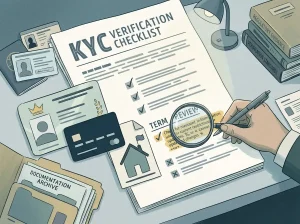
Identity verification can become a hold point if it is left until a withdrawal is requested. Specialist casino reviews advise completing KYC checks early, so documents can be assessed before money is due to leave the account. The operator’s terms should also make clear which documents are required and how an account may be restricted while checks remain outstanding.
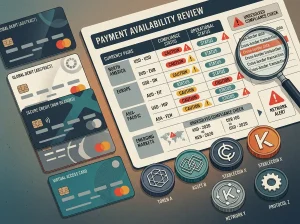
Payment timing depends on the method and the casino’s own processing. Specialist reviews report that e-wallet withdrawals are generally faster than card withdrawals, while casino processing may take up to 24 hours. That processing period is not necessarily the full time before funds arrive: the payment provider may add its own handling time. A stated withdrawal method therefore does not, by itself, establish a final arrival date.
Cryptocurrency introduces a different calculation. Specialist reviews note that transfers may be fast, but the value of winnings can change with the cryptocurrency’s price before conversion or withdrawal. Transfers are irreversible; an incorrect wallet address can result in permanent loss, with no routine reversal mechanism to correct the entry.
These operational conditions deserve separate scrutiny from wagering requirements, game weighting, deadlines and withdrawal caps attached to a bonus. They also sit within a broader protection gap: casinos not on GamStop operate outside the UKGC framework and may not provide mandatory responsible-gambling tools. Clear payment terms can explain a process, but cannot establish that the operator offers UKGC-level consumer protection.
Are casinos that bypass GamStop illegal for UK players to use?
No, using a non-GamStop casino is not itself a criminal offence for a UK player. However, an operator offering online gambling to UK residents without a valid UKGC licence is acting illegally.
What are casinos not on GamStop?
They are gambling sites outside GamStop’s network, generally because they operate beyond the UK Gambling Commission’s reach. They do not share data with GamStop or apply its exclusions.
What gambling sites are not on Gamstop?
Sites licensed outside the UK, for example in Malta, Gibraltar or Curacao, may not participate in GamStop. A non-UK licence does not replace the UKGC licence required for an operator serving customers in Great Britain.
How can players get around Gamstop?
GamStop does not block access to gambling sites outside its network, so using one may bypass the block there. The self-exclusion remains active at participating operators, and gambling elsewhere can undermine the protection it provides.
Is it safe to play at non-Gamstop gambling sites?
Not necessarily: these sites do not provide the consumer protections associated with a UKGC licence. Some may offer limits or reminders voluntarily, but those measures are not necessarily required.
What is Gamstop?
GamStop is a UK self-exclusion service that blocks registered users from gambling with participating UKGC-licensed operators for a selected period.
How does Gamstop work?
A person registers for self-exclusion, and UKGC-licensed operators must prevent them from gambling with them for the chosen period. The available periods are six months, one year or five years, and the exclusion cannot be shortened or cancelled before it ends.
Prepared by the Dreams Casino UK Guide editorial staff.