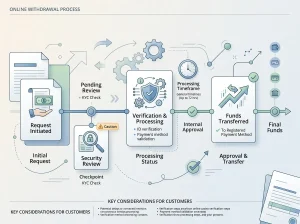
A low advertised figure may apply to one payment route only, while other methods on the same account can require a higher deposit.
How a £1 Casino Deposit Works in Practice
“No minimum deposit” is often used loosely. In a cashier, a genuine minimum deposit of £1 means the account can be funded with a £1 transaction through an available payment route. It does not mean that no deposit is required, nor that every method shown at the cashier accepts that amount. The lowest stated threshold is still a threshold.
A specialist review reported six UK Gambling Commission-licensed casinos accepting a genuine £1 minimum, while identifying NetBet as the only UKGC-listed casino on its list with a £1 cashier minimum. These are review findings, not a permanent market count: cashier settings and payment availability can change. The useful distinction is between a confirmed account-level minimum and an advertised low figure that applies only under particular conditions.
The cashier is where the distinction becomes practical. A headline may describe the smallest amount accepted by one route, while other routes on the same account can require more. A £1 option may appear only after a particular method is selected, or may not appear for the payment method already chosen. In that case, the casino does not offer a universal £1 minimum. It offers a £1 entry point subject to a method-specific condition.
A clear check therefore starts with the amount displayed beside the selected method, not the largest or smallest figure in promotional wording. The amount must be accepted by the cashier before a deposit is submitted. If the lowest option is tied to a specific route, that condition is part of the minimum; it is not a minor footnote. A payment route that cannot be used for the intended transaction does not create a practical £1 minimum.
This is why “no minimum deposit” casino wording needs careful interpretation. UK casinos do not thereby offer an account that can be used without funding. The lowest verified deposit tier described in specialist reviews is £1, and such a low threshold is reported as rare and associated with particular payment routes, including mobile billing. The label can conceal the difference between “no minimum” as a search-friendly phrase and the actual amount required at the cashier.
£2 Minimum Deposit Casinos in the UK
The account’s minimum and a payment provider’s own transaction rules also need to line up. A casino may display a low entry figure, but the selected route must be able to process that amount. If it cannot, the cashier’s general minimum does not override the route’s restriction. The final amount accepted is determined by the terms that apply to the chosen route at the time of payment.
A deposit threshold should also be kept separate from other account conditions. A £1 cashier minimum describes the amount that can be paid in; by itself, it says nothing about whether a promotion applies or what amount can later be withdrawn. Those are separate terms, and treating the cashier figure as an all-purpose promise is a category error. The deposit has cleared one condition: the minimum amount for funding. It has not automatically cleared every condition attached to the account.
UK rules set the boundary for which casinos can legally serve customers in Great Britain. Remote gambling operators selling into that market must hold a relevant UK Gambling Commission licence. A low cashier threshold does not replace that requirement. Nor does it alter the requirement that customers be at least 18, or that age be verified before a gambling account is allowed to accept deposits.
Non-Gamban Casinos in the UK: What the Label Means
The payment itself must also comply with UK restrictions. UK-licensed casinos cannot accept credit-card payments for gambling. A low figure displayed beside a payment option is not permission to use a prohibited funding source; deposits must use permitted means, such as debit cards, e-wallets funded by debit, or bank accounts. The cashier’s list of available options needs to be read within that regulatory boundary.
Before the first deposit, remote operators must prompt new customers to set a financial limit and provide account-level controls for managing it. That step belongs before the payment is made, rather than being treated as an afterthought once money is already in the account. The small size of a deposit does not remove the need for a limit.
In practical terms, a genuine £1 minimum is confirmed only when the cashier accepts £1 through an available, permitted payment route and the account can be funded on those terms. A low headline figure that depends on an unavailable or unsuitable method is not equivalent. The distinction is narrow, but it determines whether £1 is an actual entry amount or merely the smallest number in the advertising.
Attention: A "no minimum deposit" label may describe a specific payment route rather than a universal account minimum, and does not mean the account can be used without funding.
Bitcoin Casino Deposits: What the Verified Terms Do—and Don’t—Show
A Bitcoin casino deposit combines two separate questions: whether a casino accepts a particular payment route, and whether the payment can be used for gambling under UK rules. A low or absent cashier minimum answers neither question by itself. The payment method and its funding source matter independently of the amount entered.
For gambling with a UK-licensed online casino, deposits cannot be funded by credit card. The UK Gambling Commission’s ban, introduced in 2020, means gambling deposits must come from permitted sources such as debit cards, e-wallets funded by debit, or bank accounts. The distinction concerns the money’s route into the gambling account, not merely the label displayed beside a payment option.
That distinction is important when considering Bitcoin. A Bitcoin balance is not one of the permitted funding routes listed above. A search for a no-minimum-deposit Bitcoin casino therefore does not establish that a UK-licensed casino accepts Bitcoin for gambling deposits, or that a Bitcoin transaction can be made compliant simply because its value is small. A cashier threshold and an acceptable funding source are different conditions.
Deposit size does not settle payment eligibility
The phrase “no minimum deposit” can suggest that any amount will be accepted. In practice, the amount is only one part of a transaction. A payment route must also be available at the casino and compatible with the rules applying to gambling payments. A low threshold cannot override those requirements.
£3 Minimum Deposit Casinos in the UK: How They Work
For example, a small deposit made from an eligible debit-funded source remains different in kind from a deposit funded by credit. The amount does not change the funding source. Nor does describing an account as a Bitcoin casino make its payment arrangements suitable for a UK-licensed gambling account.
The useful distinction is between a casino’s cashier terms and the underlying funding method. Cashier terms concern the amount the operator will accept through a route. Funding rules concern where the money came from and whether it may be used for gambling. Both conditions must be satisfied; meeting one does not automatically satisfy the other.
What the UK restriction means for credit-funded payments
The credit-card ban applies to gambling deposits, rather than being a matter of an operator’s preference about its minimum deposit. An e-wallet is not, by its name alone, enough to establish that a payment is permitted: the relevant condition is that the wallet is funded by debit. Bank accounts and debit cards are also among the stated permissible sources.
This makes the source of funds central to any payment description. A payment option that appears to offer a convenient route into an account cannot be assessed solely by the speed or size of the transaction. For a UK-licensed casino, the deposit still has to come from an allowed funding source. Credit-card funding does not become acceptable because an intermediary or a different payment label is involved.
Bitcoin searches can blur those separate issues. They may describe interest in using cryptocurrency, in depositing a small amount, or in both. But a minimum-deposit label does not confirm that a cryptocurrency route is available at a particular operator, and it does not establish how that route would meet UK gambling-payment requirements. Those are separate matters.
UK Payment Rules
UK-licensed casinos cannot accept credit-card payments for gambling; deposits must come from permitted sources like debit cards or bank accounts.
Read the terms as two conditions
A sound assessment of any proposed deposit starts with two checks: the cashier’s minimum for the relevant payment method, and the permitted source of the funds. The first is an operator term; the second is a regulatory condition. Neither should be inferred from a general claim about “no minimum” or from a payment method’s name.
For British customers, remote operators offering gambling must hold the relevant UK Gambling Commission licence. The legal framework is therefore not satisfied by a low entry amount or by the use of a particular currency alone. Deposits at a licensed casino must still follow the UK restrictions on gambling payments.
The practical conclusion is narrow but important: “no minimum deposit” describes an amount condition, while Bitcoin describes a proposed payment asset. Those terms do not prove one another. UK gambling deposits must be funded through permitted sources, including debit cards, debit-funded e-wallets or bank accounts; credit-card funding is excluded. A small figure in a cashier advertisement cannot alter that rule.
Recommended online casinos
- JetsetspinsBonus: 200% Bonus + 100 Free Spins + Free Royal Wheel · Payout speed: 1-3 business days
- SlotoSportBonus: 500% up to £ 10 200+ 777 FS · Payout speed: 1-3 business days
- WinBeastBonus: €5000 + 500 FS + €650 Freebet · Payout speed: 1-3 business days
- DieselwinBonus: Welcome Pack 250% up to £4000 + 200 FS · Payout speed: 1-3 business days
- ChanzeBonus: Slots Welcome Bonus #1 200% up to €500 · Payout speed: 1-3 business days
- NightWinBonus: £900 + 400 free spins · Payout speed: 1-3 business days
- ZombillionBonus: Welcome Pack 250% up to £4000 + 200 FS · Payout speed: 1-3 business days
- AmunbetBonus: Join now and get 450% up to 2,700 GBP + 450 FS · Payout speed: 1-3 business days
Real-Money Play at Low Deposit Levels
A £1 deposit can be enough to open the door to real-money play at some UK casinos, but it is an entry balance, not a measure of how long that balance will last. The distinction matters: the amount needed to fund an account and the amount needed for a worthwhile session are different questions. A low starting point makes play possible; it does not make the balance stretch further once stakes are placed.
At a casino that accepts a £1 deposit, the initial balance is exactly that amount before any bets are made. Many slots accept stakes from £0.10 to £0.20 per spin. At those levels, £1 represents five to ten spins if the full balance is staked and none of the spins return a win. That is a simple spend-down calculation, not a forecast: slot outcomes vary, and a return on one spin does not guarantee that the balance will last longer overall.
£4 Minimum Deposit Casinos in the UK: What to Know
This makes a £1 starting balance best understood as a small test of real-money play rather than a session budget. It can establish that the account is funded and that a game can be played, but the number of spins is limited when each wager takes a noticeable share of the balance. The same stake that looks modest in isolation represents a substantial fraction of £1. A series of losing spins can therefore use the balance quickly.
A larger deposit changes the amount available for play, not the price of each spin. If a game accepts a stake within the stated range, its stake remains the same whether the account began with £1 or a higher balance. The practical difference is the number of wagers the balance can cover before it is depleted, subject to any returns during play. A deposit figure should therefore be compared with the intended stake, rather than treated as a standalone measure of value.
A specialist review of UK casino terms reports £10 as the typical minimum for casinos accepting direct banking, with some operators setting the threshold at £5 and others at £20. Those amounts describe a different entry point from the rare £1 option. They provide more starting funds for play, but do not imply that every game requires a higher stake or that a larger balance will produce a better result. The arithmetic is straightforward: the balance determines how much can be staked in total; the game’s accepted stake determines how quickly that balance is exposed.
Do
- Compare the deposit figure with the intended stake per spin
- Understand the balance as a limit on the number of wagers
- Treat a £1 balance as a small test of real-money play
Don’t
- Treat a low deposit threshold as a promise of extended play
- Assume a larger balance will produce a better game result
- Confuse the entry cost with a cost-free way to try a game
The comparison between £1 and £10 is especially clear at the slot stakes stated above. A £10 balance is ten times a £1 balance, so it can cover ten times as much in nominal stake before any returns, assuming the same stake per spin. That does not make ten times as many spins certain. Wins, losses and changing stakes alter the remaining balance, and no starting amount removes that uncertainty. It only changes the funds available at the outset.
“ No minimum deposit” can also be misleading as a description of real-money access. A casino may have a low cashier minimum, but the practical starting balance still has to support the intended play. At a £1 entry point, a single spin at the higher end of the stated stake range uses one fifth of the starting funds. At the lower end, it uses one tenth. Either way, each wager is material relative to the balance. The phrase describes the deposit threshold, not a promise of extended play or a cost-free way to try a game.
For a starting amount that is closer to the reported direct-banking thresholds, the balance-to-stake relationship is less restrictive, though the same calculation applies. The useful comparison is not simply “£1 versus £10”; it is how much of the available balance each chosen stake represents. A low stake can preserve more of a small balance for later spins, while a higher stake uses it faster. Neither approach changes the underlying uncertainty of slot outcomes.
Real-money access also sits within the UK’s operating rules. Customers must be at least 18, and an operator must verify age before allowing a deposit. New customers must also be prompted to set a financial limit before their first deposit, with account-level limit controls available. These steps affect whether play can begin and how spending is controlled; they do not increase the funds in the account.
A realistic view of low-deposit play separates three figures: the minimum accepted to fund an account, the stake selected for each spin, and the balance remaining as play continues. Some UK casinos accept £1, while a specialist review places the direct-banking entry point at £10, with reported alternatives of £5 or £20. Against slot stakes of £0.10 to £0.20, the £1 option offers only a small starting balance. The lower entry cost is real; so is the narrow margin for repeated play.
Online Casino Sites: Payment Thresholds Can Differ by Method
A casino’s cashier minimum is not necessarily a single figure that applies to every payment route. At a given UK operator, the stated minimum is generally consistent across methods, but some operators set a higher threshold for direct banking than for cards or e-wallets. The payment option selected can therefore determine whether a small deposit is accepted, even when the casino advertises a lower entry point.
The useful comparison is between the operator’s general cashier minimum and the minimum shown for the chosen method. If those figures differ, the lower one is not a universal promise: it applies only to the route that supports it. A card may permit an amount that direct banking does not, or the cashier may require a larger transfer. The payment screen is where the operative threshold appears; a headline figure alone does not settle the matter.
A casino’s general cashier minimum may differ from the minimum required for a specific payment method, such as direct banking.
There is also a difference between a deposit limit and the conditions attached to a payment route. The minimum sets the smallest transaction the cashier will process. Other route-specific conditions can affect whether that transaction is available or how it is treated. A specialist review reports that some operators restrict particular methods at the £1 level. That is a method-level condition, not evidence that every payment option at the same casino accepts £1.
The distinction matters when an online casino site promotes a low minimum deposit. The claim may describe one available route rather than every route listed in the cashier. It does not mean that all casino games can be started without depositing, nor that every payment option has no minimum. “No minimum deposit” is not a literal description of a real-money transaction: payment systems and operators set transaction thresholds, and the relevant amount depends on the route offered.
For online slots and other casino games, the deposit threshold is separate from the amount required to place a stake. A cashier can accept a deposit at one threshold while the selected payment method requires another; neither figure by itself describes the terms of every game. The practical check is to compare the amount requested with the minimum displayed beside the selected payment option before confirming the transaction.
Payment routes also have to remain within UK gambling rules. UK-licensed casinos cannot accept credit cards for gambling deposits. Eligible routes include debit cards, bank accounts and e-wallets funded by debit; a credit-funded wallet is not a workaround. That restriction concerns the funding source, not the operator’s deposit threshold. A route can meet the cashier minimum and still be unsuitable if its funding method is not permitted.
A low displayed figure should therefore be read narrowly: it identifies an entry condition for a particular operator and, where specified, a particular payment method. It does not establish that every route shares that threshold or that the deposit carries the same promotional treatment. The cashier’s method-specific terms define what can be deposited; the amount alone does not define what follows.
The 2026 Bonus Calculation: Deposit Thresholds and Wagering
A minimum deposit and a bonus-qualifying deposit are separate amounts. A casino may accept £1 into an account while setting a higher threshold for its welcome offer. The balance is credited, but the promotion does not follow automatically.
A specialist review of UK welcome offers reports qualifying deposits in the £5 to £10 range. It also notes that some terms set the qualifying amount at £10 even where the cashier accepts £5. At the lower end, that distinction is material: a £5 payment could meet the cashier minimum and still fall short of the bonus condition. A £1 deposit can fund real-money play without activating a welcome deal.
The calculation therefore starts with the offer’s eligibility clause, not the headline bonus. The amount required to open or fund an account tells nothing by itself about the amount needed to qualify. A promotion may also specify a deposit amount that must be made in one transaction, so the relevant wording is the stated qualifying condition. Where that condition is not met, no bonus value should be included in the account’s expected promotional balance.
From 19 January 2026, UK Gambling Commission rules set a ceiling of 10 times the bonus funds for wagering requirements. In practical terms, a £5 bonus could not carry a requirement to wager more than £50. That is a cap on the required turnover, not a promise that the bonus will be awarded, retained or converted into withdrawable cash. Eligibility still depends on the offer terms, and completion of wagering remains a separate condition.
Bonus Wagering Calculation
Step 1: Identify the bonus
Determine the bonus amount awarded (e.g., £5).
Step 2: Apply the UK ceiling
Apply the UKGC wagering limit of 10 times the bonus funds.
Step 3: Calculate the total
Multiply the bonus by the multiple (£5 × 10) to find the maximum required wagering (£50).
The distinction matters because the deposit and bonus are different inputs in the calculation. If an offer requires a qualifying deposit and awards bonus funds, the wagering multiple applies to those bonus funds—not to the deposit simply because it was used to claim the offer. The arithmetic can be written as:
Bonus amount × permitted wagering multiple = maximum required wagering
For a £5 bonus at the 10-times ceiling, the result is £50 in wagering. If the qualifying deposit condition is not met, the bonus amount is zero, so there is no bonus wagering requirement to calculate. The deposited money remains a separate balance subject to the casino’s terms.
The 10-times limit does not remove the need to check game restrictions or other bonus conditions. Nor does a low cashier minimum establish that a welcome promotion is available at that amount. Those are separate terms, and treating them as one figure can make a small deposit look more promotional than it is.
Before the first deposit, the account process must prompt a customer to set a financial limit. The bonus calculation should then be assessed against the amount actually intended for deposit and the exact qualifying condition. A low entry amount is useful only as an entry amount; the offer’s eligibility threshold determines whether it buys access to a promotion.
Withdrawal Minimums After a Small Deposit
A £1 deposit sets the amount entering the casino account; it does not set the amount that can leave it. The cashier may accept a small payment while the withdrawal rules impose a higher floor. Any balance below that floor can remain in the account until it reaches the required amount, subject to the operator’s terms.
The gap can be substantial. Specialist casino reviews report withdrawal thresholds of £10 to £20 at many UK casinos. That is a reported range, not a fixed rule for every operator: the cashier and account terms determine the threshold that applies. A £1 deposit therefore cannot be treated as £1 that is automatically available for payout.
Other specialist casino reviews report lower minimum withdrawals of £1 to £5 where debit cards or certain e-wallets are used. These figures describe possible withdrawal terms, not a promise that every payment route supports them. The payment method can matter, and a casino may apply a separate threshold to a particular route. The relevant withdrawal method and its minimum need to be checked independently of the deposit amount.
The arithmetic is straightforward. If a casino’s withdrawal floor is £10, a balance of £1 does not meet it; the account would need to reach the stated minimum before a withdrawal could be requested. If the applicable floor is £1, the balance meets that amount threshold, although that alone does not establish that a payout will be immediate. “No minimum withdrawal” should not be assumed from a low cashier minimum or from a payment method that accepts small transactions.
Deposit and withdrawal terms should therefore be read as separate conditions: one governs money paid into the account, the other governs the balance eligible to be withdrawn. A small deposit may be accepted without making a matching small payout possible. Where the operator gives different withdrawal minimums by method, the amount available for withdrawal depends on the method selected as well as the account balance.
Note: A low deposit minimum does not guarantee a matching low withdrawal threshold; many UK casinos require £10 to £20 for payouts.
A fast withdrawal claim is also separate from the minimum amount. The threshold says what balance may be requested; it does not state how quickly the payment will be processed. Neither a £1 deposit nor a low withdrawal floor establishes payout speed. The useful comparison is the actual cashier minimum for deposits alongside the stated withdrawal floor for the chosen payment route.
PayPal, Phone Billing and Other Low-Value Payment Routes
Visa and Mastercard debit cards are accepted at almost all UK casinos and can support low-value deposits. That does not make every cashier minimum £1: the amount shown for the selected payment route is the relevant threshold. A PayPal option, where available, should be assessed on the same basis. Its presence does not by itself establish that a £1 deposit is accepted.
Phone billing can reach the lowest deposit tier, but that tier is uncommon. A specialist review describes £1 deposits as rare and generally tied to particular mobile-billing services, such as Boku or Payforit. The phone-bill route therefore needs to be considered separately from card payments: a low advertised minimum may apply only to that method, rather than to every way of funding the account.
The amount debited from a balance can also differ from the amount credited to the casino account if a provider adds a transaction charge. A specialist review reports flat fees of £1 to £3 for some payment transactions. On a small deposit, a fee in that range materially changes the cost: a charge may equal or exceed the intended stake balance. The provider’s fee terms should therefore be read alongside the casino cashier amount, rather than treated as a minor detail.
UK gambling deposits cannot be funded by credit card. Permitted routes include debit cards, e-wallets funded by debit and bank accounts; a wallet that allows credit-card funds to be used for gambling is not an acceptable workaround. Mobile billing should not be assumed to bypass those restrictions.
Before an account accepts a first deposit, the operator must verify the customer’s age and prompt them to set a financial limit. UK players must be at least 18. For a low-value payment, those account conditions still apply; the size of the transaction does not remove them.
Low-Cost Slot Spins and Free-Spin Conditions
A low-cost slot session is measured spin by spin. Many slots accept stakes from £0.10 to £0.20 per spin, so a small balance can cover several rounds, but the number depends on the stake selected and the outcome of each spin. The stake is not the same as a guaranteed cost for a set period: a losing spin reduces the balance, while a win changes it.
Free spins need a separate calculation. They may be attached to a promotion, but any winnings can carry conditions before they become withdrawable. A specialist casino review reported wagering terms from 30x to 65x the total winnings from free spins. That range should not be treated as a current UK offer: since 19 January 2026, UK rules cap wagering requirements on gambling incentives at 10x. The applicable terms for a UK-licensed offer must fit that cap.
The clock on the spins is another condition. A specialist review described expiry windows ranging from 24 hours to 14 days. An expired spin has no remaining value, so the deadline matters even where the stake itself costs nothing. This is distinct from the expiry period for bonus funds: a free-spin deadline should not be read as permission for bonus funds to expire outside the required period.
Free Spin Conditions
Free spin value depends on the number of spins granted, the expiry window (ranging from 24 hours to 14 days), and the wagering requirements on winnings (capped at 10x under 2026 UK rules).
The final value of an offer therefore depends on three separate details: how many spins are granted, how long they remain available, and what conditions apply to winnings. The spin count alone does not show how much cash can be withdrawn. A stated winnings figure may still be subject to the permitted wagering requirement and any other applicable bonus terms.
Online slots in Britain must run spins lasting at least 2.5 seconds, and autoplay is not permitted. The maximum stake per game cycle is £5 for players aged 25 and over, and £2 for those aged 18 to 24. UK casino accounts are for adults aged 18 or over; operators must verify age before allowing deposits. A financial limit must also be set before the first deposit.
PayPal and Welcome Offers: The Deposit Method Is Not the Bonus
A payment method does not determine the welcome offer. At UK-licensed casinos, direct banking deposits can qualify on the same terms as card or e-wallet deposits; the bonus conditions do not change according to which of those routes funded the account. That distinction matters when comparing a low minimum deposit with an offer that has separate eligibility rules.
A cashier accepting a small deposit does not, by itself, establish that the payment qualifies for a promotion. Nor does the mention of PayPal establish that a particular casino accepts it or includes it in a welcome offer. Availability and eligibility are separate terms, and neither should be inferred from the other.
Once bonus funds are credited, the relevant restrictions attach to those funds, not to the deposit route. Wagering requirements, game restrictions and maximum withdrawal caps are determined by the bonus terms. Since 19 January 2026, wagering requirements on gambling incentives cannot exceed 10 times the bonus funds. That cap does not make every offer identical in its other conditions.
£5 Minimum Deposit Casinos in the UK: Key Terms
The distinction also applies to searches for a no-deposit bonus or a low-threshold casino offer. A small cashier minimum describes how little can be deposited; it does not mean that an offer is free of a qualifying deposit or other conditions. A “best” label cannot settle those terms. The useful comparison is between the stated payment eligibility and the bonus rules attached to the credited funds.
Before a first deposit, UK remote operators must prompt new customers to set a financial limit and provide account-level controls. Real-money gambling is for adults aged 18 or over at UK-licensed sites.
Non-GamStop Casinos and the Limits of What Can Be Verified
“Non-GamStop” describes a casino’s relationship with GamStop, the UK self-exclusion service. It does not state the casino’s cashier minimum, and the label alone does not establish whether an operator holds a UK Gambling Commission licence.
That distinction matters in Britain. Remote gambling operators serving customers in Great Britain must hold the relevant Commission licence, wherever the operator is based. A site’s description as outside GamStop is not a substitute for that licensing status. Nor does the label establish that a particular casino is available to British customers or that its deposit terms are suitable.
The phrase “no minimum deposit” also needs a precise meaning: it may refer to a genuine cashier minimum, or to a particular payment route or promotion. A non-GamStop description does not resolve which applies. Without clear operator terms, there is no sound basis for stating that a named casino accepts a deposit at a particular level.
The financial distinction is separate from self-exclusion. A small cashier minimum, where offered, says nothing about the amount needed to start play or any conditions attached to funds. Those details must be stated by the operator and may differ between account terms and promotional terms.
For UK customers, legal status is the first filter, not an optional label comparison. Legal online gambling in the UK is provided by operators holding a current UKGC operating licence; offshore operators outside that system are not UKGC-licensed. Customers must also be at least 18, and licensed operators must prompt new customers to set a financial limit before their first deposit. A “non-GamStop” description cannot replace either check.
Non-UK Licence Casinos: Regulation and Player Risks
Which payment method is best for low-deposit casino players?
Debit cards are a practical choice: Visa and Mastercard are widely accepted and support low deposits. Some e-wallets also allow £1 transactions, but check the cashier’s minimum for the selected method.
What is the best £1 minimum deposit casino in the UK?
NetBet is the only UKGC-listed casino identified with a £1 cashier minimum. Check its cashier before depositing, as payment options and thresholds can change.
Which payment methods usually accept £1 deposits?
Debit cards and some e-wallets can support £1 deposits. Boku or Payforit mobile billing may also offer a £1 entry point, where available.
Can players claim a bonus with a small deposit?
A small deposit may not qualify: welcome offers commonly require £5 to £10, and some casinos exclude their lowest deposit tier. Check the promotion’s qualifying deposit before paying in.
What is the current minimum deposit?
The lowest UK casino deposit tier is £1, but it is uncommon and may be limited to particular payment methods. Direct banking commonly has a £10 minimum, although some operators set it at £5 or £20.
Is a £1 deposit casino worth it?
It can be useful for trying a casino with little money, but a £1 deposit often will not qualify for a welcome offer, and withdrawal minimums may be higher. Check for transaction fees too, as some providers charge £1 to £3.
Written by the editors at Dreams Casino UK Guide.