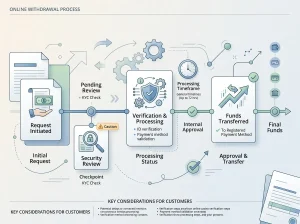
Live casino play combines a broadcast from a physical table with software that records player choices and displays the round.
How Live Casino Play Works Online in the UK
A live casino brings a dealer-led table to a screen. A camera streams the table, while software displays the game interface and lets players make selections or place bets. The dealer handles the physical cards, wheel or other equipment; the software records each player’s choices and presents the resulting hand or round. The experience is therefore different from a digital game in which every action and outcome is generated entirely on screen.
The stream and the interactive interface work together. A player sees the dealer and table, while controls on the same screen are used to take part. The platform sends those selections to the game system, which associates them with the current round. The broadcast then shows what happens at the table. In a well-designed interface, the relevant choices and table state are visible without having to infer them from the video alone.
This format is often called live dealer play. “Live” describes the use of a real dealer and a broadcast from a physical table; it does not mean that the service is informal or outside a casino’s normal operating structure. The game is delivered through an online platform, and the operator remains responsible for the service offered to its customers. The table may be in a studio or another facility, but its physical location does not determine whether the operator has the right to offer remote gambling to people in Great Britain.
The stream, the table and the interface
A live table generally has several parts on screen: the dealer’s view, the game area, the current round’s information and controls for participating. Depending on the game and the platform, the view may change between cameras or show close-ups of cards, a wheel or other equipment. The visual presentation provides context, while the interface carries the player’s input.
That distinction matters when assessing what is happening. A video feed is not itself a record of a player’s selection. The platform’s controls and round information communicate which action has been registered. If the video and interface appear out of step, the displayed game status and the operator’s applicable rules are more relevant than an assumption based on a momentary image. The broadcast may continue while the interface is waiting for an action, or the table may move on once the relevant stage has ended.
Fast Payout Online Casinos in the UK: What to Know
The interaction is structured around rounds. The system opens a period in which the table accepts the relevant inputs, closes that period, and then presents the outcome. The dealer conducts the physical part of the game, while the software manages the online participants’ interface and displays the round’s progress. The precise screens and controls differ between games and operators, so the same label or layout should not be assumed across every live casino.
A connection also affects how the experience feels. A live broadcast has to reach the device, and player input has to reach the platform. A delay in the picture or a moment of buffering can make the table feel less immediate than a game running entirely on a device. The stream is not the same thing as the game’s underlying record: the video shows events, while the interface communicates the state of play and whether an input has been accepted. That is why the on-screen status should be checked rather than treating every visible movement as confirmation that a choice has registered.
The format can be watched on a computer, tablet or phone where the operator supports that device. Screen size changes how much of the table and interface is visible at once. A smaller display may require switching views or scrolling through controls; a larger one may show more information together. These are practical differences in presentation, not differences in the game’s regulatory status.
Some live tables also include features that let participants interact with the dealer or with other players through chat or related controls. Such features are part of the platform experience, not a separate licence category. Their presence does not establish that a casino is authorised to offer gambling in Great Britain, and their absence does not by itself indicate a problem. The licence question concerns the operator’s legal permission to provide the gambling service.
A live dealer broadcast is a presentation of the table and does not guarantee that every control is available at all times; on-screen status should always be checked.
What “online” changes—and what it does not
Moving a casino table online changes how a player sees and interacts with it. The physical table is viewed through a stream rather than from a seat in the venue, and the player’s decisions are transmitted through software rather than communicated directly to the dealer. The dealer still conducts the table activity shown in the broadcast. The online platform connects that activity to remote participants and records their participation.
The stream can make a table feel more immediate than a fully automated game, but it does not remove the need to understand the interface. A player needs to distinguish between watching a round and taking part in it, recognise when the platform is accepting inputs, and check that a selection appears as registered. A live feed is a presentation of the table, not a guarantee that every control is available at every moment.
Nor does the dealer’s presence establish that a particular operator is properly authorised. A polished studio, recognisable game format or professional broadcast is not a substitute for regulatory permission. In Great Britain, the legal status of the operator is a separate matter from the look and feel of its live tables.
The UK regulatory framework
The UK Gambling Commission regulates gambling activity in the United Kingdom, including online casinos. For commercial gambling in Great Britain, it is the sole regulator. Remote gambling offered to consumers in Great Britain falls within its remit regardless of where the operator’s key equipment is located. A company cannot avoid the relevant British licensing requirement simply by placing its servers, studio or other equipment elsewhere.
Keno Online Casinos in the UK: Payouts and Play
The Gambling Commission issues operating licences to businesses and personal licences to individuals who perform relevant roles in operating gambling in Great Britain. These are different forms of permission: an operating licence concerns the business offering the service, while a personal licence relates to an individual’s role. The presence of a licensed individual does not replace the need for the business to hold the appropriate operating licence.
The Gambling Act 2005 governs gambling in England, Wales and Scotland. It defines a casino as an arrangement that gives people an opportunity to participate in one or more casino games. An online service can therefore fall within the gambling framework even though its participants are not physically present at the table. The remote format changes the means of access, not the fact that a gambling service is being provided.
For a live casino serving customers in Great Britain, the central regulatory point is the operator’s permission to offer remote gambling. The location of a dealer or broadcast facility does not alter that obligation. A live table may be transmitted from outside the country, but an operator selling the service to Great Britain consumers must hold the relevant Gambling Commission licence. The same principle applies to online casino activity more broadly, rather than only to streamed games.
Regulatory Status
An operator serving consumers in Great Britain must hold a Gambling Commission operating licence regardless of where its servers or studios are located.
This framework is important because visual signals can be persuasive but are not evidence of regulatory status. A stream may show a real dealer, a branded studio and a functioning interface; none of those details answers whether the business is authorised to serve the market. Regulatory permission attaches to the operator and its licensed activity, not to the camera, the dealer or the appearance of the table.
What a live table can and cannot tell you
A live table can show how a round is conducted and make the sequence of events easier to follow. It can also provide a more social presentation than a game with no visible dealer. Those qualities describe the format. They do not establish the fairness, availability or licensing status of a service on their own.
The interface is also a practical boundary. It determines which actions the platform accepts, when a round is open for participation and what information is displayed. The exact format depends on the game and operator. A familiar visual layout should not be taken to mean that all tables use identical controls or operating conditions.
It is useful to keep three questions separate: what is being streamed, how the online platform records participation, and whether the operator is authorised to offer the service in Great Britain. The first concerns the broadcast; the second concerns the technical interface; the third is a regulatory matter. A convincing answer to one does not settle the others.
Live casino play is still gambling, whether the table is viewed on a phone or a larger screen. Any money staked should be money that can be afforded to lose. The streamed format adds a human presentation, but it does not change the financial nature of the activity or the need to treat participation as a cost rather than an expected return.
3-Reel Slots in the UK: Format, Rules and Play
Recommended online casinos
- JetsetspinsBonus: 200% Bonus + 100 Free Spins + Free Royal Wheel · Payout speed: 1-3 business days
- SlotoSportBonus: 500% up to £ 10 200+ 777 FS · Payout speed: 1-3 business days
- WinBeastBonus: €5000 + 500 FS + €650 Freebet · Payout speed: 1-3 business days
- DieselwinBonus: Welcome Pack 250% up to £4000 + 200 FS · Payout speed: 1-3 business days
- ChanzeBonus: Slots Welcome Bonus #1 200% up to €500 · Payout speed: 1-3 business days
- NightWinBonus: £900 + 400 free spins · Payout speed: 1-3 business days
- ZombillionBonus: Welcome Pack 250% up to £4000 + 200 FS · Payout speed: 1-3 business days
- AmunbetBonus: Join now and get 450% up to 2,700 GBP + 450 FS · Payout speed: 1-3 business days
Real-Money Play: Funding, Risk and Verification
Playing live casino games for real money means that each accepted wager is taken from an account balance with cash value. A streamed table may look like a continuous game, but the financial arrangement is still an account-based one: funds must be available before a stake is placed, and losses reduce the balance. The distinction between watching a dealer and staking money is straightforward; the consequences of a stake are not reversible just because the game is live.
Funding has a clear legal boundary in the UK: gambling with a credit card is prohibited. A payment method should therefore be checked before a deposit is attempted, rather than treated as interchangeable with any other card or account. A failed payment is not a reason to keep trying alternative routes without first checking the operator’s accepted methods and the relevant restrictions. The source of funds also matters in practice: account details and payment records may be reviewed as part of identity and security checks.
Age verification is required before an operator allows a customer to deposit into a gambling account. That makes verification part of access to real-money play, not a formality to leave until a later dispute. Account details should be accurate and consistent with the documents that may be requested. If verification is incomplete, a withdrawal can be restricted while the checks are under way. A displayed balance is therefore not always immediately transferable: the account may need to satisfy the operator’s verification requirements first.
Do
- Set a fixed spending limit before play
- Keep essential spending separate from gambling funds
- Confirm permitted payment routes
Don’t
- Use credit cards for gambling
- Chase losses to recover funds
- Use borrowed money for stakes
This is particularly relevant to live casino play because the format can make decisions feel immediate. A dealer continues the game, other players may be visible, and the next betting window arrives without much pause. None of that changes the need to decide in advance how much money is affordable to lose. A budget is a ceiling, not a target to reach. Once it has been used, adding funds to recover earlier losses turns a defined entertainment cost into an open-ended one.
Chasing losses does not improve the terms of a game or make a previous result less costly. It only adds further exposure. A practical budget should be set before opening a real-money live casino, with essential spending kept separate from gambling funds. If a session reaches that limit, stopping is the financial decision that preserves it. Borrowed money and money needed for bills are not suitable substitutes for a depleted gambling balance.
The same discipline applies to the account balance between sessions. Depositing more than the planned budget because a payment is available does not make the additional stake affordable. Nor should a live dealer casino be treated as a place to park money: the balance is exposed to wagers, and there is no guaranteed return from participation. The useful figure is the amount that can be lost without affecting ordinary expenses, not the amount the account will accept.
Verification and money management serve different purposes. The budget limits planned exposure; identity checks establish whether the account can be used and whether funds can be withdrawn. Both should be considered before staking, especially where a player expects to withdraw promptly after a session. A withdrawal may remain unavailable while KYC checks are being completed, so account verification should not be assumed to happen instantly at the point of cash-out.
Fastest Payout Online Casino UK: What to Verify
For a live casino UK real-money account, the sensible order is to confirm that the payment route is permitted, complete accurate account information, and decide on a fixed spending limit before play begins. Credit cards are excluded for gambling under UK rules. The remaining balance is not a measure of what should be wagered: only money that can be afforded as a loss belongs in the session, and losses should not be chased.
Live Casino Games and the UK Slot-Stake Distinction
Live casino games bring familiar table formats into a streamed setting, but the category covers more than one kind of play. Roulette centres on where a ball lands; blackjack compares the player’s hand with the dealer’s; baccarat offers choices between the Player and Banker hands; and live poker tables may involve competition between players rather than only against the house. The rules, pace and available betting options differ, so “live” describes how a game is presented, not a single set of stakes or outcomes.
Roulette
Centres on where a ball lands with betting rounds settled before the result.
Blackjack
Compares the player’s hand with the dealer’s total, with decisions based on the hand in progress.
Baccarat
Offers choices between the Player and Banker hands.
Live Poker
May involve competition between players rather than only against the house.
These formats may be presented with a human dealer on camera, but their presence cannot be assumed across every casino lobby. A site’s catalogue can change, and a named game or provider does not establish that a particular table is currently open. The lobby itself is the relevant place to confirm what is available. Free-play versions, where offered, can help show how a table interface works; they do not establish the terms or experience of a real-money table.
The UK distinction that matters here is between online slots and table games. A specialist review reports that, in Great Britain, the online slot stake cap is £5 per game cycle for customers aged 25 and over. That figure is specific to slots; it should not be carried across to roulette or blackjack. The limit does not apply to those two table-game formats, so a slot stake rule is not a reliable guide to the stake controls shown at a live table.
This difference does not mean that a table has no limits. Each game can display its own permitted stakes and betting options, and those conditions should be checked in the current lobby before play. The key point is narrower: the online slot cap and the table’s own limits are separate matters. A roulette or blackjack screen is not subject to the slot limit simply because it is accessed through the same online casino.
That distinction is useful when comparing a slot session with a live table. A slot stake is attached to a game cycle; roulette and blackjack use their own betting rounds and table rules. The regulatory limit cited for slots therefore cannot be used to calculate what a live table will accept. Nor does the absence of that slot cap establish that any particular stake is permitted at any particular table.
5-Reel Slots in the UK: Stakes, Features and Play
The game label alone also says little about how a session will run. Roulette involves placing bets before the result is settled, while blackjack decisions depend on the hand in progress. Baccarat has its own betting choices, and live poker may use a different competitive structure. These are separate formats, not interchangeable versions of one game. The table information and rules determine the practical conditions.
For a comparison that keeps the categories straight, treat the slot cap as a rule for online slots and check the displayed conditions for each live table independently. That avoids applying a slot restriction to roulette or blackjack—or assuming that those games share the same stake arrangements simply because they appear in a casino’s live section.
Checking a Live Casino Site Before Opening an Account
A live casino’s branding, dealer stream and range of tables do not establish its regulatory status. The relevant check is whether the business offering gambling to customers in Great Britain holds a current operating licence from the UK Gambling Commission. A licence issued elsewhere does not replace that requirement.
The Commission’s public register can be searched by the operator’s legal name, trading name or other identifying details. These names may differ: a casino brand can be operated by a company whose name is not prominent on the site. The terms and conditions or footer may identify the business behind the brand. Matching those details against the register is more useful than relying on a badge displayed on a homepage.
Licensing Check
Identify Operator
Find the legal operator’s name in the website’s terms and conditions or footer.
Search Register
Search the Gambling Commission public register using the legal name or brand.
Verify Licence
Confirm the entry is specifically an operating licence for the site being considered.
The distinction is material in the case of Hustles Casino. A specialist review reported that the Curaçao Gaming Authority listed Usoftgaming N.V. with an active business-to-consumer licence, reference CGA/2025/1353/1345. The same review reported that a search of the Gambling Commission register on 25 September 2026 found no operating-licence entry for either Usoftgaming N.V. or Hustles Casino.
Those records describe different regulatory systems. An active Curaçao licence is not a UK Gambling Commission operating licence, and it does not make a site authorised to serve customers in Great Britain. The reported register result is specific to the names searched and the date of that check; register details can change. It should not be treated as a permanent statement about a company’s status.
For a UK-facing live casino website, the practical sequence is straightforward:
- Identify the legal operator named in the site’s terms.
- Search the Gambling Commission register for that operator and the casino brand.
- Confirm that the relevant entry is an operating licence, rather than assuming that any company listing or foreign licence is sufficient.
- Check that the register information corresponds to the site being considered.
A missing match is not a minor detail to resolve through the quality of the lobby. In Great Britain, remote gambling operators serving consumers must hold the relevant Commission licence, regardless of where their equipment or business is based. The Commission is the regulator for commercial gambling in Great Britain; Northern Ireland has a separate legal framework.
This check establishes a site’s licensing position, not whether a particular live table is currently available. Game availability can vary, so a licence entry should not be read as confirmation of a specific dealer game or current lobby. Conversely, a polished stream cannot compensate for the absence of the required UK operating licence. For UK live casino sites, the order of assessment is therefore regulatory status first, then the products actually shown in the current lobby.
Live Blackjack: Busts, Insurance and Table Limits
A live blackjack hand is settled against the dealer’s hand, with the player’s total measured against 21. If the player’s cards add up to more than 21, the hand busts and the original bet is lost. A tie, often called a push, returns that bet rather than producing a win or loss. These outcomes make the final card value material: a hand can be strong without being safe if another card takes it over 21.
Insurance is a separate wager offered when the dealer’s second card is an Ace. Its cost is half the original stake. For a £10 hand, that means putting another £5 at risk on insurance, making the total amount committed £15. The insurance decision is therefore not a cost-free way to protect the main bet; it adds a distinct stake. The relevant comparison is between the extra amount placed and the possible exposure on the original hand, not simply whether the dealer’s visible card looks threatening.
Insurance Cost
Example: £10 original stake × 0.5 = £5 insurance wager.
A specialist review gives £5 as a live blackjack table’s minimum bet and £5,000 as its maximum. Those figures describe the range reported in that review, not a promise that every live blackjack casino offers those limits. Table stakes can differ between lobbies and tables, so the displayed limit is the operative condition before a hand is placed. A low minimum does not make a higher stake sensible: only money that can be afforded to lose should be wagered.
What the numbers mean at the table
The minimum defines the entry stake for that table; the maximum is the ceiling for an individual bet. Neither determines the amount needed to continue playing, since each hand creates a fresh decision and may end in a loss, a returned stake or another outcome under the table’s rules.
For anyone comparing live blackjack casino sites, the table panel is more useful than a broad label such as “low stakes” or “high limits”. It shows the actual minimum and maximum attached to the selected table. A table with a higher ceiling is not evidence of better value; it simply permits larger wagers. The stake should remain within a set budget, and losses should not be chased by increasing it.
Insurance also deserves separate attention from the main hand. Since its price is half the original stake, accepting it changes the total exposure before the dealer’s hand is resolved. The original bet and the insurance bet should be treated as two amounts at risk, rather than as one protected wager. In live blackjack, the arithmetic is uncomplicated; the terms of each decision are what matter.
Monopoly Live Casino UK: Format, Access and Checks
Live Dealers, Software and the Pace of Play
A live table combines a video stream of a dealer with software that handles the betting interface. The dealer manages the physical game; the screen displays the available actions, lets players place or adjust wagers, and records decisions before the round moves on. The stream and controls are parts of one session, but they do different jobs: the video shows what is happening at the table, while the software communicates each player’s choices.
That distinction matters when comparing live blackjack software. Providers may present the same basic format through different layouts, controls and table displays. A real-money live roulette table or a live baccarat game uses the same broad dealer-led idea, but the controls and decisions depend on the game. A lobby label alone does not confirm that a particular table is currently available; availability needs to be checked in the live lobby.
The pace is set by the table, not by the player’s preferred reading speed. A specialist review records a 15-second window for placing wagers at live blackjack tables and 12 seconds for choosing hit or stand. These are reported timings, not a guarantee that every operator or table uses an identical clock. Once a decision window closes, there may be no opportunity to change that round’s action.
The practical cost of a short timer is attention. Rules and intended decisions need to be clear before a hand begins; using the countdown to study the interface can leave too little time to act. Connection delays or interruptions can also make the stream harder to follow, so the on-screen status and action controls matter as much as the dealer’s camera feed. The same principle applies across live dealer formats: software is the route for submitting a decision, not a substitute for understanding what that decision does.
Attention: Decision windows at live tables are short; connection delays can make the stream harder to follow than the software controls.
A live table is therefore less flexible than a game that can be paused between actions. A budget should be set in advance, and only money affordable to lose should be wagered. If a session feels rushed, leaving the table is a more controlled choice than making a decision simply because the timer is running.
Deposits and Dealer-Game Offers: Read the Conditions First
A deposit promotion has at least two separate conditions: the amount needed to qualify and the games that count towards its terms. A specialist review reports welcome-offer deposit thresholds in the £10–£20 range. That is a reported range, not a standing rule: the active promotion page and its terms determine the amount for a particular offer.
A live-dealer promotion may be attached to a deposit offer, but its presence does not mean every live table qualifies. Eligibility can depend on the specific promotion, account and game. Live casino providers supply games or the technology behind them; they do not set a universal offer rule. A live casino solution, whether developed in-house or supplied externally, is not evidence that a bonus applies to its games.
A no-deposit live casino bonus is structured differently: it does not require the qualifying deposit specified by a deposit offer. That label alone says nothing about whether the promotion is available to a particular account, which games qualify, or what conditions apply before winnings can be withdrawn. Availability and restrictions must be confirmed in the current terms; a no-deposit label is not a substitute for them.
JetX Casino Game in the UK: Demos and Rules
Game contribution rates are particularly important for dealer games. Live and other table games may contribute at a restricted rate, or be excluded, so bonus funds can be less useful to someone who mainly plays those games. For a welcome bonus, focus only on slots with a 100% contribution rate. A live table appearing in the lobby does not make it an eligible bonus game.
Before opting in, check the full bonus terms and wagering conditions, including the qualifying deposit, eligible games, contribution rates and any restrictions on winnings. Bonus terms, wagering requirements and game eligibility can change. Check the current promotions page before signing up, then verify the terms of the specific offer: eligibility and value may vary between UK accounts.
The arithmetic of a wagering requirement is only one part of the decision. First establish whether the offer can be claimed and whether the games intended for use count towards its conditions. If the offer excludes those games or gives them restricted contribution, the advertised bonus amount does not represent equivalent playable value. The condition, rather than the headline, decides what the promotion is worth.
Live Casino Bonuses: The Wagering Arithmetic
A wagering requirement turns a bonus figure into a required volume of bets; it does not describe the amount that can be withdrawn. The distinction matters because the bonus may remain unavailable for cashing out until the stated wagering condition has been met, and the balance used to meet it may be exposed to losses along the way.
A wagering requirement defines the volume of bets required before a bonus can be cashed out, not the amount that will be withdrawn.
A specialist review gives a clear calculation: a £100 bonus carrying a 35x wagering requirement calls for £3,500 in bets before cashing out. That is the betting volume, not a promise of £3,500 in winnings or a guarantee that the original bonus will remain intact. If the balance falls before the required total is reached, the calculation may no longer lead to a withdrawable amount.
The multiplier also needs a base. Terms may calculate wagering against the bonus, the deposit, or both, so the same stated multiplier can produce different obligations. The relevant figure is the one defined in the promotion’s own terms, not the largest number in its headline. Wagering requirements, bonus terms and game eligibility can change; a previously advertised live casino bonus code or offer should not be treated as current until its terms are checked.
Game contribution affects how quickly qualifying bets count. For a welcome bonus, focus only on slots with a 100% contribution rate, and check the promotion’s definition of eligible play. Live and other table games may contribute at a restricted rate or be excluded, leaving more wagering outstanding than the visible betting total suggests. The full bonus terms and wagering conditions should be read before opting in.
Free spins create a separate calculation. A specialist review notes that winnings from free spins may be capped and may also carry wagering requirements. The displayed winnings therefore need not equal the amount available to withdraw: a cap can limit the qualifying balance, while a further wagering condition can postpone cash-out. Both conditions belong in the final calculation.
The useful comparison between live casino bonuses is the cash obligation attached to each offer, alongside the games that count towards it. A large headline amount can carry a larger wagering total or less favourable eligibility. The best live casino bonus is therefore not necessarily the largest one; its value depends on the amount that can realistically be cleared under the stated rules.
Casino Offers and Their Value for Live-Game Players
A welcome offer can look substantial and still be a poor fit for someone who mainly plays live dealer tables. The key figure is not the headline bonus but the contribution each eligible game makes towards its wagering requirement. Live and other table games may contribute at a restricted rate, so more play can be required to clear the same offer than the headline suggests. Some games may be excluded altogether.
For bonus wagering, focus only on slots with a 100% contribution rate. That does not make a slot bonus automatically worthwhile: the full terms still determine which games qualify, what wagering applies and whether other restrictions affect the offer. Bonus terms, wagering requirements and game eligibility can change.
The same check matters when comparing live casino sign-up offers. A promotion described as suitable for casino play does not establish that live blackjack, roulette or live poker qualifies, or that it contributes at the same rate as slots. Poker labelled as live casino poker may have separate eligibility rules; availability and contribution should be confirmed in the specific promotion terms rather than inferred from its name.
Before opting in, read the full bonus terms and wagering conditions. Check the current promotions page before signing up, then review the terms for the specific offer: eligibility and value may vary between UK accounts. A live-game player should compare the qualifying contribution with the actual games they intend to play, not just the advertised bonus amount. If the offer depends on substantial slot play to retain value, it may not suit a table-focused account.
Any promotion remains conditional, not extra cash without strings. Set a budget, wager only money that can be afforded to lose, and do not chase losses to complete an offer.
Created by the "Dreams Casino UK Guide" editorial team.