

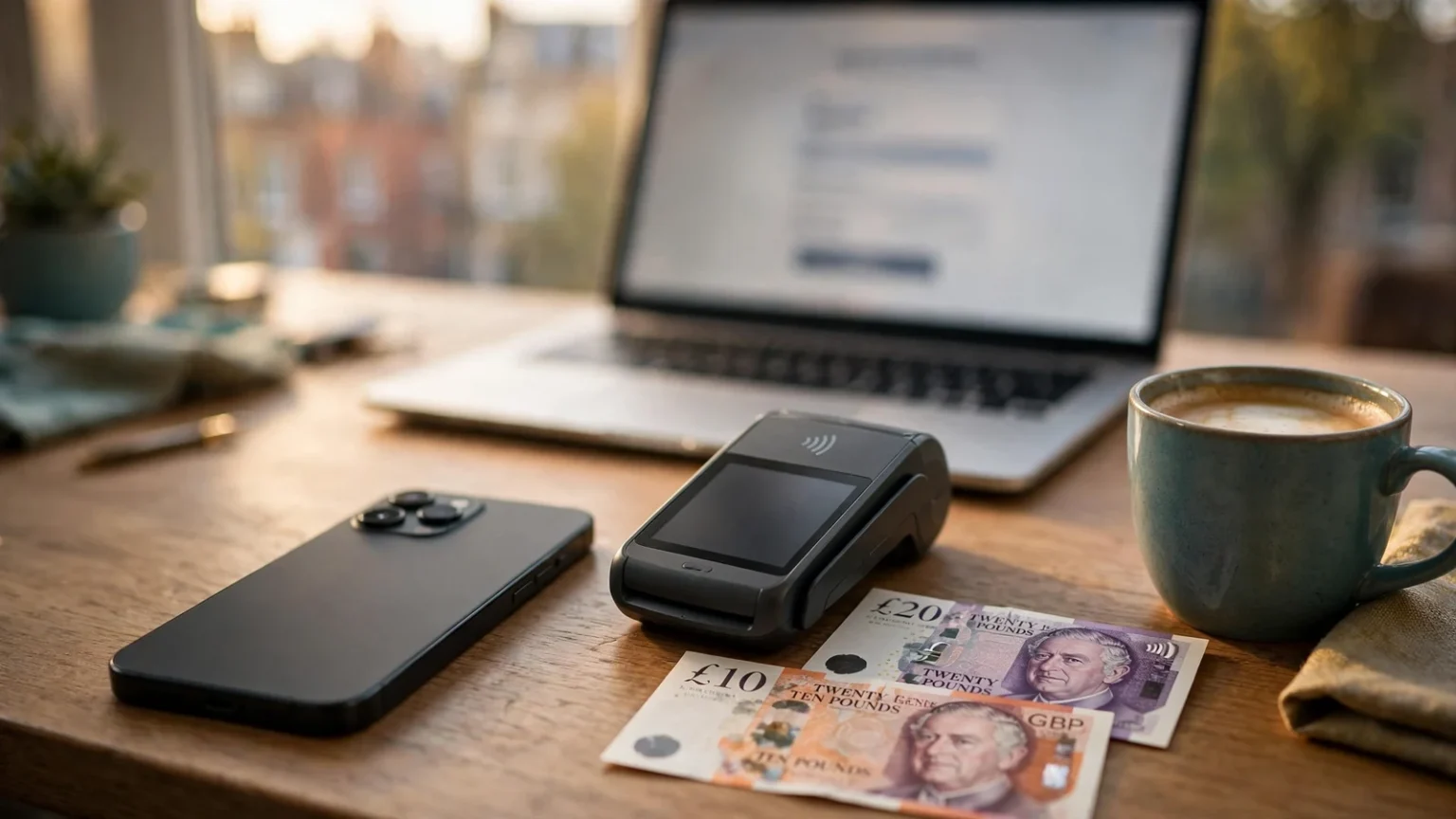
Direct banking can refer to different bank-linked processes, so the cashier’s payment instructions and withdrawal options matter.
Direct Banking at UK Casinos: What the Term Covers
“Direct banking” is a broad label for casino payments that connect a transaction to a bank account. It does not identify one universal product or guarantee that every casino uses the same process. A cashier may use the phrase for an Open Banking payment, a bank transfer, or more generally a bank-linked route. The method’s actual name and instructions matter more than the label.
Open Banking is one form of bank-linked payment. It allows a payment to be initiated through a connection with a customer’s bank, with the customer authorising the transaction. A bank transfer is another route: money is sent from a bank account to the account details specified for the transaction. Both involve a bank account, but the steps and payment flow are not necessarily identical. A casino listing “direct banking” should therefore not be assumed to accept every kind of bank payment.
The distinction is useful because cashier labels can make different processes look interchangeable. A bank-linked payment starts with a bank account, but the casino may present it through a payment service or a dedicated option in its cashier. A conventional payment source, by contrast, is identified by its own product or service rather than by the bank account from which funds may ultimately have originated. The label alone does not settle which route is being used.
For a UK player, “Open Banking casinos” is best understood as shorthand for casinos whose cashier offers an Open Banking payment route. It is not a separate kind of casino, nor does the phrase by itself confirm that a particular payment method is available to every account. Availability can depend on what the cashier presents for that customer and on the route’s own requirements. A site’s general payment page is a starting point; the current cashier is the practical confirmation.
TRON TRX casino comparison in the UK: licensing
This also explains why a list of casinos said to accept direct banking can age quickly. A payment option may be described under a provider’s name, under Open Banking, or under a more general bank-payment heading. Those descriptions are not necessarily evidence of separate methods, and a familiar label is not proof that the route remains active. The operative detail is the payment option shown when the account is ready to transact.
Direct banking should not be confused with a debit card simply because the card draws money from a bank account. A card payment uses the card as the payment instrument. An Open Banking payment or bank transfer is bank-linked in a different sense: the route is based on a bank account rather than the card details. The source of the funds may be related, but the payment method is not the same. Calling every bank-funded payment “direct banking” would erase a distinction that matters when comparing cashier terms.
Nor does “direct” mean that no other organisation or processing step is involved. The phrase describes the apparent connection to a bank account, not necessarily the full technical path between the casino and the bank. The cashier’s instructions determine how authorisation works and what information is required. Without those details, “direct banking” remains a category label rather than a complete description of the transaction.
A bank-linked route is easiest to identify when the casino names the method clearly and the account details match. Using account information and a payment route belonging to the same customer reduces the chance that basic ownership details will create avoidable friction. That is a practical consistency check, not a promise that a transaction will be approved or processed without further review.
Casinos That Accept Dogecoin in the UK: What to Check
Specialist casino reviews sometimes describe Open Banking or bank transfers as capable of supporting instant deposits and fast withdrawals at many sites. That should be treated as a report about the sites reviewed, not a fixed feature of direct banking everywhere. A payment route’s presence does not establish the timing of every transaction, and the words “instant” or “fast” do not define what the cashier will deliver in a particular case.
The term also says nothing by itself about the casino’s wider status. In the UK, remote gambling operators serving the British market must hold the relevant Gambling Commission licence. A payment label cannot establish that status; the operator and its licence are separate matters.
In short, direct banking is an umbrella description, while Open Banking and bank transfer name more specific bank-linked approaches. The distinction prevents a broad marketing phrase from being mistaken for a precise payment specification. When a casino is described as accepting Open Banking, the meaningful check is whether that named route appears in its cashier and what process the cashier sets out—not whether the site uses the words “direct banking” somewhere on a general page.
How Online Casinos Use Open Banking
At an online casino, Open Banking is presented as a bank-linked way to make a payment through the cashier. Its role is practical: it connects the payment choice on the casino account with a bank account, rather than requiring the transaction to be entered as a conventional card payment. The exact route and wording depend on the cashier, so the method name alone does not establish how a particular site handles a transaction.
The online process begins with the casino’s payment options. If Open Banking is offered, it should appear there as a selectable route, with instructions for continuing the transaction. The payment may then involve choosing or confirming a bank and authorising the request through the relevant banking process. The screens and steps can vary. For that reason, a general description of Open Banking cannot substitute for the instructions shown at the point of payment.
Casinos That Accept Litecoin in the UK: What to Check
The distinction matters when a casino lists several bank-related choices. A bank transfer and an Open Banking payment are not automatically the same cashier option simply because both involve a bank account. A site may name the route specifically, or group it under a broader label. The relevant evidence is the payment method displayed in the cashier and the terms attached to that selection, not an assumption based on the word “bank”.
A casino may also present different methods in different account areas or at different stages. The deposit cashier is where a payment route is selected for adding funds; information elsewhere on the site may describe available methods more generally. If the cashier does not show Open Banking for the account in use, an old payment-method list or a general page description is not confirmation that the route is currently available for that transaction.
Currency is a separate check
The account currency deserves attention before the first transaction. A specialist review reports that GBP is supported on the sites it examined, but that does not establish the currency of every casino account or every cashier. The casino account’s displayed currency is the relevant detail. If it is not GBP, a payment from a sterling bank account may involve conversion; choosing a bank-linked route does not, by itself, settle which currency the casino account uses.
Currency should therefore be checked before an amount is entered and the payment is authorised. The account profile or cashier may show the selected currency. If the display is unclear, the casino’s payment terms or support channel can clarify it before funds are sent. This is a basic reconciliation: the currency leaving the bank account, the currency credited to the casino account, and any conversion shown in the transaction information should be understood as parts of the same payment.
Do
- Check the account currency before the first transaction
- Use the casino’s support channel to clarify currency if the display is unclear
- Reconcile the currency leaving the bank with the currency credited to the account
Don’t
- Treat a supported payment route as proof that the account is denominated in sterling
- Authorise a payment before confirming the account currency
- Assume a later review can undo a conversion already applied
The timing of that check matters. After a transaction has been authorised, the currency setting may affect how the payment is recorded, and a later review of the account may not undo a conversion already applied. Confirming the account currency before the first transaction avoids treating a supported payment route as proof that the account itself is denominated in sterling.
Read the cashier as the operative instruction
For online use, the cashier is more than a list of brand names. It is the point at which the casino presents the route available for the current account and transaction. The payment label, the stated currency, and the instructions shown before authorisation should be read together. If one of those details does not match the intended transaction, the payment should not be treated as settled merely because Open Banking appears somewhere on the site.
The same care applies when returning to the cashier later. A method that appeared previously may not be displayed in the same way at another visit. The current options and terms are more useful than a saved description or a general claim that the casino accepts Open Banking. Availability is only one part of the transaction; currency determines how the account records the funds.
This makes Open Banking an online payment route whose usefulness depends on the specific cashier presentation and the account settings attached to it. The route can link a casino payment to a bank account, but it does not remove the need to check the transaction details. In particular, GBP support reported in a review should not be read as a guarantee that every account is already set to GBP. The account currency is a separate setting, and confirming it before the first payment is the cleanest way to avoid an unexpected conversion.
Casinos That Accept Wirecard in the UK: What to Check
Open Banking as a Casino Payment Route
An Open Banking payment at an online casino is a bank-linked route: the payment is associated with a bank account rather than presented as a card payment or a separate stored balance. That distinction matters when comparing the source of funds shown in the casino cashier with the account used to manage the money. The label describes the route, not a different kind of casino balance.
The practical question is whether the route fits the account holder’s ordinary payment setup. A bank-linked payment is most straightforward when the casino account, the bank account and the payment details all belong to the same customer. Using one named account consistently for deposits and withdrawals can reduce avoidable friction caused by mismatched ownership details. A payment may be accepted initially and still prompt questions later if the account information does not align.
This is not a promise that every bank-linked route will work with every account. The casino’s cashier determines which options are available for that account, and a payment provider may apply its own conditions. The route should therefore be assessed from the actual payment screen and account details, rather than from a general description of Open Banking elsewhere. A method’s name alone does not establish that it is available, eligible or suitable for a particular customer.
Using one named account consistently for deposits and withdrawals can reduce avoidable friction caused by mismatched ownership details.
Bank-linked route versus payment source
The distinction is easiest to see by separating the source of money from the route used to move it. With a bank-linked payment, the bank account is central to the transaction. A conventional payment source may instead be a card or a separate payment account. Both can ultimately draw on money associated with a bank, but that does not make their payment records interchangeable.
For account management, consistency is more useful than switching between routes without a reason. If deposits are made from one named bank account, keeping that same account as the reference point for later transactions gives the casino a clearer ownership trail. Changing between personal accounts, or using details that do not match the casino profile, can create questions that a consistent setup may avoid. This is an administrative advantage, not a guarantee of acceptance or processing.
The same principle applies when a payment is described as Open Banking by a casino with Open Banking in its cashier. The term does not, by itself, tell a customer which bank accounts are supported or how the casino records the transaction. Those details belong to the payment flow and the operator’s stated terms. The account holder should be able to identify which personal account is being used and whether the displayed payment information matches it before confirming a transaction.
Casinos That Accept Bitcoin in the UK: Payment Checks
A casino that accepts Open Banking may list the route alongside other cashier options, but the presence of a label is only the first check. Availability can depend on the account and the options shown at the time of payment. The sensible comparison is not between a broad claim about Open Banking and a broad claim about another method; it is between the actual route presented and the account that will fund it.
Keeping the account trail clear
A consistent account makes the transaction easier to explain if the casino requests information about payment ownership. The useful details are straightforward: the name on the casino account, the name associated with the bank account and the route selected in the cashier. If those do not align, the discrepancy is more relevant than the general convenience attributed to a payment method.
Open Banking is therefore best treated as a specific bank-linked route, not as a guarantee that any bank account will be accepted or that every transaction will be handled identically. The cleanest arrangement is often one named account used consistently for deposits and withdrawals. That keeps the payment trail coherent; the cashier’s current options and the operator’s account checks still determine what can proceed.
Deposit Timing, Minimums and Account Limits
A deposit has three separate conditions: the cashier must accept the selected method, the amount must meet its minimum, and the account must be permitted to receive funds. A displayed payment option does not, by itself, confirm that a transaction will be approved or arrive instantly. The amount and timing can depend on the method selected and the casino’s own processing.
Deposit Conditions
- The cashier must accept the selected payment method
- The deposit amount must meet the method’s minimum threshold
- The account must be permitted to receive funds
A specialist review places the minimum deposit at £10–£20, with the precise threshold varying by payment method. That range is a reported guide, not a fixed UK-wide tariff. The cashier’s current terms determine the amount accepted for a particular account and transaction. A method with a lower minimum may not be available to every customer, while a higher threshold can make a small deposit impossible through that route.
Timing should be assessed separately from the minimum. A specialist review reports that open banking and bank transfers can support instant deposits at many sites. This is not a guarantee for every operator or transaction: the payment must still be authorised and accepted. A pending status is not the same as cleared funds, and the cashier’s transaction record is the practical reference for whether the balance has been credited. Where timing matters, the stated processing information for the selected method is more useful than a general label such as “instant”.
The first deposit also sits behind account checks. Remote gambling operators must verify a customer’s age before allowing funds to be deposited into a gambling account. A failed or incomplete check can therefore prevent a payment from proceeding, even if the amount and payment route meet the cashier’s stated conditions. The deposit figure alone does not establish that an account is ready to transact.
Diners Club at UK Casinos: What Acceptance Depends On
A separate control applies to new customers: UK Gambling Commission rules require remote operators to prompt them to set a financial limit before their first deposit. Operators must also make account-level limit controls accessible. The limit is an account-management setting, not a payment-method minimum. One determines the customer’s chosen boundary for gambling expenditure; the other is the smallest amount a cashier will accept through a particular route.
This distinction matters when comparing a proposed deposit with the account settings. A payment can satisfy the cashier’s minimum and still be blocked or constrained by the customer’s financial limit. Conversely, setting a limit does not reduce the payment provider’s minimum. The two conditions operate independently, so the deposit amount is usable only where both the transaction rules and the account controls permit it.
The sequence is therefore material: age verification must be completed, the required financial-limit prompt must be addressed before the first deposit, and the amount entered must meet the selected method’s minimum. If any condition is unmet, the transaction may not complete as intended. That is a different issue from how quickly an approved payment is credited.
A direct-banking deposit should be treated in the same way. The route may offer rapid crediting at a particular casino, but speed does not override account checks, the cashier’s minimum or the account’s financial limit. A “no deposit bonus” label is also not evidence that a deposit route has no minimum; bonus eligibility and deposit processing are separate terms and must not be inferred from one another. When the amount is below the cashier threshold, or exceeds the account setting, the payment conditions do not align.
First Deposit Sequence
Step 1: Age Verification
Complete the mandatory age verification process required by remote gambling operators.
Step 2: Financial Limits
Address the UK Gambling Commission requirement to set a financial limit before the first deposit.
Step 3: Amount Check
Ensure the entered amount meets the specific minimum threshold of the selected payment method.
Comparing Casino Payment Options on Verifiable Terms
A payment-method list is a starting point, not proof that a route is available to every account. A specialist payment review lists Visa and Mastercard among the options, but current UK availability and eligibility depend on what the casino’s cashier presents for the specific account. The useful comparison is therefore between options that can actually be selected, not between logos on a general information page.
For bank-linked payments, the same distinction applies: a casino describing Open Banking does not establish that a particular bank or account can complete a transaction through its payment flow. Availability needs to be checked at the point of payment. A method that appears in general terms but cannot be selected in the cashier is not a practical option for that account.
What a useful comparison records
A like-for-like check should capture the details that determine whether a payment can proceed:
- Method shown: Is the route visible in the account’s cashier, rather than only on a general payments page?
- Account eligibility: Does the cashier allow the account holder to use that method, including the specific card product where relevant?
- Transaction purpose: Is the method presented for the intended transaction, rather than merely named as a general payment option?
- Currency displayed: Is the account currency clear before the transaction is confirmed?
- Terms at confirmation: Are any conditions or charges shown before the payment is authorised?
These checks separate availability from description. A card brand can be named in a site’s information while an individual card remains ineligible or unavailable. The brand alone does not resolve that question.
For Open Banking, comparison should likewise be based on the route actually offered in the cashier and the account details it requests. The label does not establish that every bank is supported, nor that a payment will succeed in every case. A useful record notes the named route, the available bank choices and any eligibility conditions displayed before confirmation. If those details are absent, there is not enough to treat the method as confirmed for that account.
Avoiding misleading comparisons
Payment pages can make unlike options appear equivalent. One may be a broad description of a payment type; another may identify a selectable route with account-specific conditions. Comparing those entries as though both prove the same thing produces a weak result. The cashier is the relevant check for current availability; the public list is context, not a substitute.
The same rule applies when comparing casinos described as suitable for Open Banking deposits or withdrawals. Those labels should not be treated as a ranking or as evidence that a route is currently available to a particular customer. A payment option must be verified in the account interface, and the stated purpose of the method must match the transaction being considered. A deposit label alone does not establish withdrawal compatibility.
A compact comparison record can keep the decision auditable: note the method shown, whether it can be selected, the account or card eligibility stated, and the currency and terms displayed before authorisation. If a detail is not visible, mark it as unconfirmed rather than filling the gap with an assumption.
Payment Comparison
- Confirm the route is visible in the account’s cashier
- Verify the account holder is eligible to use the method
- Check that the method is presented for the intended transaction
- Confirm the account currency is clear before authorisation
- Review any conditions or charges shown before payment
That approach also gives “safe” or “fast” descriptions a proper boundary. A label is not evidence of account eligibility or a completed transaction. The verifiable point is narrower: whether the cashier currently offers the route, whether the account can use it, and what conditions are disclosed before payment. When those checks are made on equal terms, the comparison is about available choices rather than promotional wording.
UK Direct Banking and the Card-Payment Boundary
Direct banking and card payments are separate routes in a UK casino cashier. A bank-linked option does not make every payment connected to a bank equivalent: debit cards remain a distinct choice, and the card’s type matters. UK casinos commonly accept debit cards, including Visa and Mastercard, although the available methods can vary by operator.
That distinction matters when comparing a casino with direct banking in the UK. A cashier may present a bank-linked route alongside card logos, but the names alone do not establish that every card product is eligible. Visa and Mastercard are networks used for debit cards as well as other card products; the UK gambling restriction applies to credit-card payments, not to debit-card deposits as a category. The relevant boundary is therefore the funding method, not simply the brand printed on a card.
Credit-card gambling has been prohibited since 14 April 2020. The rule has not been relaxed. UK-licensed casinos cannot accept credit-card payments for gambling, including when credit-card funds are routed through a money service business. A payment route does not become permissible merely because it passes through another service before reaching the gambling account.
For a direct banking casino site in the UK, the practical comparison is not “banking or cards” as if one replaces the other. It is whether the cashier offers a bank-linked route, whether it separately lists debit cards, and whether the intended card is a debit product. A reference to Visa or Mastercard by itself does not confirm that a particular card will work. Nor does the presence of a direct banking option alter the credit-card prohibition.
Casinos That Accept E-Checks in the UK: What to Check
Labels such as “best” or “trusted” do not answer that payment question. The useful distinction is concrete: bank-linked payments sit on one side of the cashier’s options; eligible debit-card payments sit on another; credit-card payments for gambling are barred. Any presentation that blurs debit and credit into one undifferentiated “card” category leaves out the condition that determines whether the deposit is allowed.
Payment Methods Beyond Bank-Linked Deposits
A casino cashier may offer ways to fund an account without using a bank-linked payment route. These alternatives are not interchangeable: some are deposit-only, while others can carry conditions that affect promotion eligibility.
Paysafecard is a prepaid voucher for deposits. It does not provide a withdrawal route, so it cannot complete the full movement of funds between a casino and a player. A separate payout method may be needed, subject to the casino’s rules and any checks it requires.
E-wallets such as Skrill and Neteller appear at some casino sites. Their presence in a cashier does not establish that they qualify for every offer. A specialist review reports that these wallets are often excluded from promotions; the terms for the specific offer and payment method determine whether that applies. A bonus can therefore change the effective value of a deposit, even when the payment itself is accepted.
The same specialist-review material describes Skrill as one of the more common deposit methods at UK-facing casino sites in 2026. That is a description of reported availability, not a guarantee that Skrill will appear at a particular operator or remain eligible for a particular promotion. The cashier and offer terms are the operative checks.
PayPal is another alternative cited for speed and convenience, but a specialist review also notes that it may be excluded from bonus eligibility. That condition should be treated as offer-specific rather than assumed to apply across the market. Payment availability and promotion eligibility are separate questions.
Before selecting any non-bank-linked option, the relevant comparison is practical: whether the cashier currently accepts it, whether it can be used for the intended transaction, and whether the applicable promotion permits it. A method that accepts a deposit may still leave a separate withdrawal route to arrange, as with a prepaid voucher. The name displayed in a cashier is not a complete statement of its function.
Casinos That Accept Boku in the UK
These alternatives can suit different payment preferences, but their limitations are material. Deposit-only means no payout capability; wallet acceptance does not settle bonus eligibility. Both points belong in the comparison before funds are committed.
Fees, Currency Conversion and the Cost of a Deposit
The amount entered in a casino cashier is not necessarily the full cost of a deposit. A specialist casino-payment review identifies several possible charges along the route: a fee from the casino, a charge from the payment provider, a fee from the bank or card issuer, currency conversion, and network costs. Which of these apply depends on the transaction and the parties processing it; a payment method’s label does not settle the total.
Currency is a separate calculation. If the casino account and the funding account use different currencies, conversion may occur before the funds reach the casino. A specialist payment review notes that the exchange-rate spread—the difference between the applied rate and a reference rate—can cost more than a clearly displayed flat fee. A route advertised with no separate charge is therefore not automatically the cheaper one.
For a direct banking casino deposit, the useful comparison is the final amount debited against the amount credited, in the currency actually used. A visible casino charge is only one line in that calculation. Provider pricing, bank charges and conversion terms can change the result, while network costs may also apply to some payment routes. The cheapest option cannot be identified from a fee label alone.
A practical comparison uses the same deposit amount and checks the cashier’s stated charge, the provider’s terms, the bank’s possible fees and the conversion rate that will be applied. If the account is set up in pounds sterling, confirming that currency before the first transaction can help avoid an unnecessary conversion. Where another currency is involved, compare the final debit rather than relying on the displayed exchange rate in isolation.
A route advertised with no separate charge is not automatically the cheapest, as exchange-rate spreads can cost more than flat fees.
Casino banking guides may describe a method as free, but that wording can refer only to one part of the transaction. A specialist review’s comparison of payment costs likewise points to no universal lowest-fee method: the answer depends on the actual amount and the combined charges. For a trusted direct banking casino, cost is best assessed from the complete debit and credit figures, not from the most prominent fee in the cashier.
Withdrawal Routes, Processing and Source-of-Funds Checks
A withdrawal is not simply the reverse of a deposit. UK anti-money-laundering rules commonly require winnings to be returned to the payment source used to fund the account. This closed-loop approach links the outgoing payment to the original transaction and helps the casino check where the funds came from.
That can matter when a direct banking deposit is followed by a request to withdraw through a different route. A casino may need to establish that the alternative account belongs to the same customer, or request further checks before releasing funds. Using one named account consistently for deposits and withdrawals reduces avoidable questions about ownership, although it does not remove the casino’s right to carry out checks.
The time shown for a withdrawal should be read as a process, not a single transfer estimate. A specialist casino-payment review reports that processing can take longer on a first withdrawal while verification is completed. The operator’s internal approval is part of that interval; only after approval does the payment move through the relevant banking or payment channel. The elapsed time therefore cannot be inferred from how quickly a direct banking deposit appeared.
KYC may involve confirming identity and checking account details. If information is incomplete, inconsistent or still under review, the casino may not approve the payout yet. An alternative withdrawal route can also require additional verification where it does not match the original source.
For a direct banking casino withdrawal, the useful distinction is between the casino’s decision and delivery by the payment system. “Instant withdrawal” does not describe the whole process unless the casino’s approval has already been completed and the receiving route has processed the payment. Any displayed estimate should be checked for what it covers, including whether it begins at request, approval or release.
When a Casino Accepts Direct Banking: Checking Payout Compatibility
A casino listing direct banking is not necessarily confirming that the same route can handle a withdrawal. The cashier’s deposit and payout options need to be checked separately: a method shown for adding funds may be deposit-only, unavailable for cash-outs, or subject to account-specific conditions.
The cleanest arrangement is often one named account, held by the same customer, used consistently for deposits and withdrawals. Matching account ownership details can reduce avoidable friction, but it does not override the casino’s payment rules. Closed-loop rules and anti-money-laundering checks may determine where funds can be sent; an alternative payout route can bring additional verification.
Speed at the deposit stage is not a reliable estimate of payout time. A specialist review describes card deposits as potentially instant while a withdrawal may take several business days. That distinction matters when comparing an online casino that accepts instant banking with one whose payment page makes no clear promise about the return route. Casino approval and account verification remain separate parts of the process.
Bank transfers also have delivery conditions beyond the casino’s stated processing status. A specialist review notes that cut-off times, weekends and currency conversion can affect when a transfer arrives. A payment marked as processed is therefore not necessarily money received.
The practical test is specific: confirm that the chosen bank-linked method appears in both cashier flows, that the payout destination belongs to the account holder, and that the casino explains any verification or routing conditions. The best casino that accepts direct banking is not established by a quick deposit alone; compatibility depends on whether the route supports the full transaction from deposit through withdrawal.
What is the fastest withdrawal method for UK casinos?
PayPal, Open Banking services and debit cards linked to fast payout systems are generally among the quickest options. The casino’s approval process and whether your account is fully verified also affect how soon you receive the money.
Why must withdrawals return to the deposit method?
Returning funds to the original payment source is a common anti-fraud and anti-money-laundering control. Using the same account for deposits and withdrawals can also help avoid ownership-related delays.
Do UK casino withdrawals require verification?
Verification may be needed, particularly for a first withdrawal, and can delay processing while it is completed. Withdrawal speed also depends on the casino’s approval process and whether your account is fully verified.
Can I use a credit card at 333 Casino in Great Britain?
No. Credit card gambling has been banned by the UK regulator since 14 April 2020, and the ban has not been relaxed.
Why can a fast payout casino still delay my withdrawal?
A casino’s internal approval process can add time, and a first withdrawal may take longer while verification is completed. Payout speed also depends on whether your account is fully verified.
What is the current minimum deposit?
The minimum deposit usually starts at £10–£20, depending on the payment method.
Recommended online casinos
- JetsetspinsBonus: 200% Bonus + 100 Free Spins + Free Royal Wheel · Payout speed: 1-3 business days
- SlotoSportBonus: 500% up to £ 10 200+ 777 FS · Payout speed: 1-3 business days
- WinBeastBonus: €5000 + 500 FS + €650 Freebet · Payout speed: 1-3 business days
- DieselwinBonus: Welcome Pack 250% up to £4000 + 200 FS · Payout speed: 1-3 business days
- ChanzeBonus: Slots Welcome Bonus #1 200% up to €500 · Payout speed: 1-3 business days
- NightWinBonus: £900 + 400 free spins · Payout speed: 1-3 business days
- ZombillionBonus: Welcome Pack 250% up to £4000 + 200 FS · Payout speed: 1-3 business days
- AmunbetBonus: Join now and get 450% up to 2,700 GBP + 450 FS · Payout speed: 1-3 business days
Published by the Dreams Casino UK Guide team.


