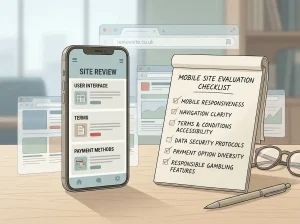
The guide separates UKGC permission to serve Great Britain from overseas licensing and explains the limits of each.
What UK Gambling Commission Regulation Covers
In Great Britain, regulation of an online casino starts with the operator’s permission to serve the market. A company offering real-money gambling to customers in England, Scotland or Wales must hold the relevant licence from the UK Gambling Commission (UKGC). Its headquarters, servers or corporate registration elsewhere do not remove that requirement. The test is whether it is supplying gambling services into the British market, not where the business is based.
The Gambling Act 2005 provides the main statutory framework for gambling in England, Wales and Scotland. It does not govern Northern Ireland, so the British licensing rule should not be treated as a description of the law across every part of the United Kingdom. Within Great Britain, however, a remote operator cannot make its service a lawful UK-facing casino simply by obtaining permission from a regulator elsewhere. The UKGC licence is the local authorisation relevant to serving British customers.
That is the baseline behind the phrase “licensed and regulated online casino”. It describes an operator holding the required UKGC permission for the gambling services it offers in Great Britain. A casino’s branding, payment options, language or claimed international reach does not establish that status. Nor does a licence from another jurisdiction substitute for the British operating licence where the operator serves customers in Great Britain.
The Gambling Act defines a casino as an arrangement that gives people the opportunity to take part in one or more casino games. Online casino services sit within that framework when they offer real-money play. The regulatory question is therefore not limited to a building with gaming tables: the relevant operator can provide casino games remotely and still be required to hold a UKGC licence when serving the British market.
The licence attaches to the operator’s activity
A UKGC licence is not merely a badge attached to a website. It is the authorisation required for an operator’s activity in the market. A company cannot avoid the requirement by describing its site as international or by locating its business outside the country. If it offers real-money gambling to customers in Great Britain, the location of its base does not change the licensing condition.
Non-Gamban Casinos in the UK: What the Label Means
This distinction matters when assessing whether an online casino is licensed and regulated in the British sense. A site may display a foreign licence or refer to an overseas regulator. Those details describe a different regulatory relationship; they do not answer whether the operator holds the UK permission needed to serve Great Britain. The relevant baseline is the UKGC licence, not the number of jurisdictions named in a footer.
The requirement also applies to remote gambling operators generally, rather than only to companies that call themselves casinos. For a casino service, the practical point is straightforward: the operator offering real-money play to customers in England, Scotland or Wales must have the appropriate Commission licence. A claim of regulation should therefore be read as a claim about a named operator and its permission, not as a quality label that follows automatically from a polished website or an advertised game catalogue.
UKGC regulation also defines the legal status of online gambling for players in Great Britain. Online gambling is legal there when it takes place through a site operated under the required licence. The age threshold is 18: a licensed operator must verify a customer’s age before allowing a deposit into a gambling account. The rule makes age verification part of access to real-money play, rather than a condition that can be postponed until a withdrawal is requested.
Product rules are part of the British baseline
The British framework also sets conditions for particular forms of online play. For online slots, the maximum stake per game cycle is £5 for customers aged 25 and over and £2 for those aged 18 to 24. The £5 limit for all adults took effect on 9 April 2025. The figures apply to the stated customer groups and game type; they are not a general limit for every casino game.
Online slot autoplay is banned in Britain, and a slot spin must last at least 2.5 seconds. These rules illustrate why “regulated” is more than a statement about the operator’s place of incorporation. The UKGC framework determines whether the operator may serve the market and includes requirements affecting how certain products are presented and played. A site’s own description of its rules does not override the British requirements applying to a UK-facing service.
Slot Stake Limits
For online slots, the maximum stake per game cycle is £5 for customers aged 25 and over and £2 for those aged 18 to 24.
The distinction is useful when comparing UK regulated online casinos with sites that appear in international searches. The comparison should begin with the operator’s status and the market it serves. A casino being available in English, accepting a familiar payment method or carrying a licence from another authority does not establish UKGC authorisation. Conversely, the company’s overseas base alone does not disqualify it if it holds the UK licence required for its British operations.
This is a narrow but consequential definition. It identifies which regulator’s permission is necessary for an operator serving Great Britain and separates that permission from licences issued elsewhere. It does not mean every casino carrying a UKGC licence offers identical games or terms; the licence establishes the regulatory basis on which the operator serves the market. Commercial conditions remain a separate matter and need to be read as written.
For a status check, the name of the operating company matters more than a site’s general claim that it is “regulated”. The UKGC is the relevant regulator for remote gambling operators serving Great Britain, and the licence must relate to the operator and activity in question. A brand name may differ from a company name, so an apparently familiar logo alone is not enough to establish who holds the permission.
The result is a clear dividing line: an online casino serving customers in Great Britain needs a UK Gambling Commission licence, whether its operator is based in Britain or elsewhere. The licence is the local regulatory requirement, while overseas authorisation is a separate matter. This distinction sets the baseline for understanding what the term “non-UK-regulated” describes without treating foreign licensing and British permission as interchangeable.
Online Casino No Registration UK: What Checks Apply
Non-UK-Regulated Casinos: What the Label Means
A non-UK-regulated casino is an online gambling site operating without oversight from the UK Gambling Commission (UKGC). The term describes its relationship with the British regulator; it does not, by itself, identify where the operator is based or establish whether another authority has licensed it.
That distinction matters. “Non-UK-regulated” does not necessarily mean “unlicensed everywhere”. Such a site may hold a licence issued by a regulator in another jurisdiction, while remaining outside UKGC oversight. The two points are separate: a foreign licence is not a UKGC licence, and the existence of one does not make the other unnecessary.
Jurisdictions commonly associated with these casinos include Malta, Curaçao, Gibraltar and Anjouan. They are not interchangeable labels for one regulatory system. Each refers to a different jurisdiction, and a casino’s stated licensing location identifies a claim that may need to be assessed on its own terms. The broad category therefore covers sites with different licensing arrangements, rather than a single standard model.
The wording can also be mistaken for a description of the casino’s physical location. It is more precise to read it as a statement about oversight: the casino does not operate under the UKGC’s supervision. An operator may be based in one place and licensed in another; neither detail changes what the label says about UKGC oversight.
A claimed foreign licence does not, on its own, tell a reader how closely the operator is monitored or what protections are available if a problem occurs. Those questions depend on the relevant jurisdiction and its rules. Treating all non-UK-regulated casinos as equivalent would flatten differences that the label leaves unresolved.
Malta
One of the jurisdictions commonly associated with non-UK-regulated casinos.
Curaçao
One of the jurisdictions commonly associated with non-UK-regulated casinos.
Gibraltar
One of the jurisdictions commonly associated with non-UK-regulated casinos.
Anjouan
One of the jurisdictions commonly associated with non-UK-regulated casinos.
Anjouan is one of the jurisdictions associated with this wider category, not a synonym for it. A casino licensed there is one particular case within a broader group that also includes sites linked to Malta, Curaçao or Gibraltar. The relevant licence and authority need to be identified before drawing conclusions about the operator. The general label alone cannot establish which regulator, if any, is responsible for the site’s licensing.
In practical terms, the phrase is a boundary marker, not a quality rating. It signals that UKGC oversight is absent; it does not certify that another regulator provides equivalent supervision, nor does it describe the casino’s terms or operating standards. Those are separate matters. Keeping those distinctions clear prevents a foreign licence claim from being mistaken for UK regulation, while avoiding the opposite assumption that every site outside UKGC oversight has the same status.
Recommended online casinos
- JetsetspinsBonus: 200% Bonus + 100 Free Spins + Free Royal Wheel · Payout speed: 1-3 business days
- SlotoSportBonus: 500% up to £ 10 200+ 777 FS · Payout speed: 1-3 business days
- WinBeastBonus: €5000 + 500 FS + €650 Freebet · Payout speed: 1-3 business days
- DieselwinBonus: Welcome Pack 250% up to £4000 + 200 FS · Payout speed: 1-3 business days
- ChanzeBonus: Slots Welcome Bonus #1 200% up to €500 · Payout speed: 1-3 business days
- NightWinBonus: £900 + 400 free spins · Payout speed: 1-3 business days
- ZombillionBonus: Welcome Pack 250% up to £4000 + 200 FS · Payout speed: 1-3 business days
- AmunbetBonus: Join now and get 450% up to 2,700 GBP + 450 FS · Payout speed: 1-3 business days
Offshore Sites and UK Players: The Legal Position
The legal position separates the operator’s obligations from the player’s potential liability. Under the Gambling Act 2005, the relevant question for an operator is whether it is supplying gambling services into the British market. A company does not avoid that requirement by locating its business overseas: operators serving customers in Great Britain need a UK Gambling Commission licence.
That rule is directed at businesses, not at individual customers. A player who uses an unlicensed gambling site does not commit a criminal offence under UK law merely by doing so. The Act does not expressly bar British citizens from using gambling services licensed in another country. Those points describe the position for the player; they do not grant an overseas operator permission to serve Great Britain without the required UK licence.
VPN-Friendly Casinos in the UK: What the Label Means
This distinction matters when a site accepts registrations or deposits from British customers. Its willingness to do so is not evidence that its operations comply with the rules governing the British market. Nor does a licence issued abroad replace the UK Gambling Commission licence required of an operator serving Great Britain. The company’s location and the player’s lack of criminal liability answer different legal questions.
It is therefore possible for an individual’s conduct and an operator’s conduct to be treated differently. The law places the licensing obligation on the business supplying the service. A British player’s use of a site without a UK licence is not, on that basis alone, a criminal offence; the operator may still be acting outside the licensing framework that applies to services supplied in Great Britain. Neither point changes the other.
The wording “accepting UK players” can also blur a practical fact with a legal conclusion. A site may appear accessible to British customers, but access does not establish that the operator is authorised to target or serve the British market. Equally, the absence of player criminal liability is not a finding that the site is approved, supervised, or entitled to offer gambling in Great Britain. Those are separate matters, and treating them as interchangeable produces a misleading reading of the law.
The territorial scope also needs care. The Gambling Act 2005 governs gambling in England, Wales and Scotland; Northern Ireland is outside that Act’s scope. The legal position described here should not be extended to Northern Ireland as if the same statute governed it. Checking the rules that apply in the relevant part of the UK, and any other local laws that may be relevant, remains the individual’s responsibility.
Legal Risk
While using an unlicensed site is not a criminal offence for the player, it does not mean the service is reliable or provides the protections of UK regulation.
For someone considering an offshore service, the narrow legal point is not an endorsement. The absence of a criminal offence for the player does not make every service lawful for its operator, make the site reliable, or provide the protections attached to UK regulation. A foreign licence may establish that a company is licensed in another jurisdiction, but it does not establish that the company holds the UK permission required to serve Great Britain.
“Non-GAMSTOP casinos for UK players” is sometimes used as a broad description of sites outside the UK system, but that wording does not alter the licensing test or settle the legal status of an operator. A site’s own claims, payment options or apparent availability cannot substitute for checking the applicable law. The relevant distinction remains between an operator’s duty to hold the required British licence and the individual player’s position under UK criminal law.
In short, UK law places the market-facing licensing duty on operators, while it does not make a player’s use of an unlicensed site a criminal offence simply because the site lacks a UK licence. That is a limited statement about legal responsibility, not a recommendation to use such services. Laws can also differ by location, so the player remains responsible for checking which rules apply before acting.
Casinos Outside UKGC Oversight and GamStop
UKGC regulation and GamStop are related, but they are not the same thing. The UK Gambling Commission regulates operators serving customers in Great Britain. GamStop is the UK self-exclusion scheme. A casino operating outside UKGC oversight is not thereby brought under the Commission’s rules, and a casino that is not part of GamStop does not participate in that scheme.
That distinction matters because a self-exclusion arrangement has a defined scope. Registration with GamStop applies to participating operators; it does not turn a non-UK-regulated casino into a UKGC-licensed business or extend the scheme to it. Casinos outside the UKGC system are not part of the Commission’s self-exclusion scheme. GamStop therefore cannot be treated as a barrier that blocks access to every gambling site outside its network.
What “not on GamStop” means
“Casinos not on GamStop” describes a relationship with the scheme, not a licence category. It means the casino is not participating in GamStop’s UK self-exclusion system. It does not, by itself, establish which jurisdiction has licensed the operator, whether a licence claim is valid, or what protections the operator provides.
The same distinction applies to casinos regulated outside the UK. A foreign licence is not a UKGC licence, and participation in a foreign regulatory system does not make a casino subject to GamStop. The operator’s location, its licensing jurisdiction and its relationship with the UK scheme are separate questions. A site may be presented as licensed elsewhere while remaining outside both UKGC oversight and GamStop.
Curaçao casinos outside GamStop are one version of this broader category, not a special exception to the distinction. The jurisdiction named in a site’s licence claim does not, on its own, determine whether GamStop covers it. The relevant point for self-exclusion is participation in the UK scheme; the relevant point for UKGC oversight is whether the operator holds the required British licence. Neither should be inferred from the other.
How GamStop works with non-UK casinos
Registration with GamStop applies only to participating operators; it does not extend to non-UK-regulated casinos, meaning these sites are not part of the Commission’s self-exclusion scheme.
What a GamStop exclusion does—and does not establish
GamStop is intended to exclude a person from participating operators. It is not a general internet filter, nor does its registration grant UKGC powers over businesses outside the Commission’s system. A non-participating site does not become blocked simply because someone has self-excluded through GamStop. Equally, a site’s absence from the scheme should not be read as evidence that it has an equivalent exclusion tool.
For anyone who has chosen self-exclusion, the distinction has practical weight. A list of participating casinos cannot be assumed to include every gambling site available online. The scheme’s scope and an individual operator’s participation are separate from whether a site can be reached. Treating the scheme as a universal access block would give a false impression of what it covers.
This is not a route around the purpose of self-exclusion. If gambling has been excluded as a way to control spending or reduce harm, using a site outside the scheme can remove a central safeguard rather than restore a controlled option. Non-UK-regulated casinos may apply less stringent responsible-gambling rules than UKGC-licensed operators. Mandatory UK tools, including the protections associated with UK-regulated services, cannot be assumed to carry over.
The protection gap
The difference is not simply administrative. When gambling takes place at an offshore casino, players lose access to the UK’s Financial Ombudsman Service and to mandatory responsible-gambling tools. Those protections are part of the UK-regulated framework; a casino outside it does not acquire them merely by accepting customers from Britain or by displaying a foreign licence claim.
Responsible-gambling provisions can also vary between operators. A site may describe controls of its own, but their existence, scope and operation should not be confused with mandatory UKGC requirements. The key financial question is whether the stated control can limit or stop activity in practice. A label such as “responsible gambling” does not establish that an independent UK scheme covers the operator.
Data protection is another area where the framework may differ. Non-UK-regulated casinos may be subject to less stringent data-protection rules than UKGC-licensed operators. That is a possibility, not a claim that every foreign operator handles information in the same way. It does mean that a UKGC standard should not be assumed where the operator is outside UKGC oversight. Personal and payment information is part of the cost of using a service, even when it does not appear in the advertised terms.
Keep the categories separate
Several labels can appear together: non-UK-regulated, licensed outside the UK, and not on GamStop. They describe different things. “Non-UK-regulated” concerns the absence of UKGC oversight. “Licensed outside the UK” refers to a claimed authorisation from another jurisdiction. “Not on GamStop” describes non-participation in the UK self-exclusion scheme. One label does not prove the others, and none guarantees protections equivalent to those of a UKGC-licensed casino.
A foreign licence claim also does not change the limits of GamStop. A Curaçao casino not on the scheme remains outside GamStop regardless of how its licence is described. Conversely, the scheme’s role is not to assess every foreign licence or to resolve complaints involving operators outside UKGC oversight. Licensing checks and self-exclusion coverage answer different questions.
The practical comparison is therefore about the protections that are present, not just the jurisdiction named in a banner. For a UKGC-licensed operator, UK rules and the UK scheme define the relevant safeguards. For a non-UK-regulated casino, GamStop membership cannot be presumed, and mandatory UK responsible-gambling tools and UK financial-ombudsman access are not available. The absence of those protections is a material difference, not a technical footnote.
Protection Differences
- Non-UK-regulated casinos lack UKGC oversight and GamStop participation.
- Players lose access to the UK Financial Ombudsman Service.
- Mandatory UK responsible-gambling tools are not available.
- Data protection rules may be less stringent than UKGC standards.
How Anjouan Casino Licences Work—and What They Do Not Guarantee
An Anjouan casino licence is evidence that an operator has obtained permission under Anjouan’s framework. It is not a passport to every market. The licence does not permit the casino to operate in the United Kingdom or in other markets that Anjouan identifies as restricted. A licence claim and the right to accept customers in a particular country are separate questions.
For a casino not regulated by the UK Gambling Commission, the distinction matters: an Anjouan licence does not make the operator UK-authorised. It also does not replace the rules that apply where the customer is located. The document’s value is therefore limited to what the issuing framework actually covers; it cannot be treated as a general assurance that the business may lawfully serve customers everywhere.
Checking a licence can establish whether a claim appears to relate to Anjouan’s framework. It cannot, by itself, establish how complaints will be resolved, what happens to deposits if the company collapses, or whether games have been independently tested. Those are separate protections, and the licence should not be read as a promise that they exist.
Complaint handling has a narrow route
Anjouan’s authority does not investigate individual player complaints, mediate between a customer and an operator, or issue decisions on disputes. The operator is required to respond to a complaint within 30 calendar days under the framework. That is a response obligation, not a guarantee of a favourable outcome or a payment.
There is also no independent dispute-resolution route equivalent to the services associated with UK Gambling Commission-approved ADR. If the operator rejects a complaint or does not resolve it to the customer’s satisfaction, the Anjouan licence does not provide a comparable external adjudicator. The distinction is practical: a deadline for the business to reply does not create an independent body able to settle the disagreement.
Player funds remain exposed
Anjouan’s framework does not require casinos to keep customer balances in accounts separate from company funds. If the operator fails, customers are unsecured creditors rather than holders of protected, ring-fenced money. Recovery would therefore depend on the operator’s financial position and the relevant insolvency process; the licence itself does not reserve funds for withdrawals.
This changes the calculation behind an account balance. Money shown on screen is a claim against the operator, not proof that an equivalent sum is held separately for the player. A valid licence cannot remove that exposure.
For non UKGC regulated casino sites, the useful question is not simply whether a licence is displayed, but what that licence obliges the operator to do and what it leaves outside its scope. An Anjouan licence may establish a regulatory connection, while offering limited recourse over disputes and no required segregation of player funds. Those limits should be weighed separately from the licence claim itself.
Payments, Bonus Terms and the Cost of Withdrawal
A payment option at a non-UK-regulated casino describes how money may enter an account; it does not establish how a withdrawal will be paid. Offshore operators may accept credit cards, e-wallets, bank transfers and cryptocurrency, sometimes using alternative payment processors. The processor and the operator’s terms determine which routes are available for each transaction. A card or wallet accepted for a deposit may not be offered for a payout, so the withdrawal method and any conversion or processing conditions need to be checked separately.
Attention: A payment method accepted for a deposit may not be offered for a payout, and withdrawal timing can vary from 24 hours to several weeks.
Cryptocurrency can be used to fund gambling without a credit-card transaction, bypassing the UK ban on credit-card-funded gambling. That describes the payment route, not the safeguards attached to the casino. A crypto casino may operate outside the UK Gambling Commission’s system; the payment type does not identify a regulator or create a route to UK regulatory complaints. The relevant question is which authority, if any, oversees the operator and what protection its rules provide.
Withdrawal timing is not consistent across accounts of non-UK-regulated casinos. Some descriptions give a range from 24 hours to five business days; others say a payout can take three or four weeks. That disagreement matters because there is no regulatory clock enforcing a payment deadline in the UK system. Verification requests, account reviews or processing delays can therefore leave the expected date uncertain. A fast deposit says nothing about the speed of a withdrawal.
A specialist review also reports that some operators set daily, weekly or monthly withdrawal limits, which can split a large win into instalments. Such a limit should be treated as an operator-specific term, not a standard feature of every site. Before depositing, the stated cap, payment route and conditions for approving a payout affect the amount actually accessible and when it becomes available.
The same calculation applies to bonuses. A specialist review reports offers with wagering requirements of 40 times, but the multiplier may apply to different bases: the bonus and deposit combined, the bonus alone, or the bonus and free spins together. Those are materially different obligations. The headline bonus value cannot be compared fairly until the qualifying balance, eligible games, expiry conditions and withdrawal rules are clear. If the wagering base is the combined deposit and bonus, the amount that must be played through is larger than if the requirement applies only to the bonus.
An advertised bonus is therefore not cash already available for withdrawal. Its value depends on the exact terms and on whether the required play can be completed before any stated condition expires. If the terms are unclear, the effective value cannot be calculated reliably. The same applies when a casino reserves discretion to review an account or request further documents: the displayed balance and the amount paid out are not necessarily the same figure.
For a UK-regulated casino, payment and promotional conditions sit within UKGC oversight. At an unregulated casino, the operator’s written terms carry more weight in practice, while UK regulators cannot enforce the payout timetable or resolve a dispute. The final figure is the cleared amount received, not the deposit accepted or the bonus advertised.
Who Checks the Games and Slot Machines?
A casino licence and a game-integrity check answer different questions. A licence concerns the operator’s authority under a particular jurisdiction’s rules. Testing concerns whether a game’s software, including its random number generator (RNG), has been examined for fair and reliable operation. The first does not establish that the second has happened.
Game Integrity
An Anjouan licence does not require RNG testing or audits, meaning the licence alone cannot confirm that a slot machine has undergone independent testing.
For an Anjouan casino, the distinction matters because Anjouan’s framework does not require RNG testing or audits. A licence claim therefore cannot, by itself, confirm that a slot machine has undergone independent testing, that its results have been audited, or that those checks continue over time. The absence of a requirement is not proof that a particular game is faulty; it is a limit on what the licence alone can demonstrate.
Slot machines are software, not just artwork and reels. Their game logic determines how symbols are selected and how outcomes are produced. An RNG is intended to generate those outcomes unpredictably. Without a mandated test or audit, the framework does not provide that assurance as a condition of the Anjouan licence. Any claim that a game has been independently checked needs separate evidence; the operator’s licence is not that evidence.
This also explains why a provider’s name or a familiar game title does not settle the question. A recognisable product may help identify what is being offered, but it does not establish which version is running, whether its software has been tested, or who performed any test. Those details require evidence about the specific game and the claimed assessment, not an inference from the casino’s jurisdiction.
In practical terms, “licensed” and “tested” should be treated as separate entries in a risk assessment. The Anjouan licence may describe the operator’s regulatory status, but it does not certify slot-machine fairness under a mandatory RNG-testing or audit regime. Where a casino makes a testing claim, the useful detail is the named testing body and a document or record that can be matched to the game. Without that, the claim remains unverified rather than becoming a safeguard by repetition.
The gap is not a technical footnote. If a game’s integrity is disputed, a licence alone does not show that an audit occurred or establish the result of one. For Anjouan-licensed sites, the framework leaves that assurance outside its mandatory requirements.
How to Verify a Casino Licence and Its Operator
A licence badge on a casino website is a claim, not verification. The useful check is whether the regulator’s public register identifies the same legal company that operates the site, and whether its authorisation is current and covers the relevant activity.
For a UKGC casino licence, use the UK Gambling Commission’s official register rather than relying on a logo or a link supplied by the operator. Search for the company named in the site’s terms and conditions, then check its licence status and whether the authorisation covers remote casino gambling. A familiar brand name is not enough: the legal entity behind it may have a different name. Operators serving customers in Great Britain need the relevant UKGC licence even when the company is based elsewhere.
For an Anjouan casino licence, look up the operator in Anjouan’s public register. Compare the register entry with the legal company identified on the casino website, and check the licence expiry date. A difference in spelling, a different company name, or an expired entry leaves the claim unconfirmed. A brand may be operated by a company with a separate legal name, but that relationship should be clear in the operator’s own terms and consistent with the register.
The jurisdiction matters as much as the entry. An Anjouan authorisation is not permission to serve customers in the United Kingdom or in other markets that the licence restricts. A valid entry therefore does not establish that the casino is authorised to operate in Great Britain. It also does not make the site UKGC-regulated.
If the register cannot be found, the details do not match, or the status is unclear, the licence claim should not be treated as established. Keep a record of the register details and the operator’s stated company name at the time of checking; a site’s wording can change, while the licence claim may remain on its pages.
A licence check confirms only what the register supports. It does not settle whether the company will honour every term or resolve a dispute in the player’s favour. Casinos outside UKGC oversight do not offer access to the UK regulator’s complaints process. Register matching is a basic identity and status check, not a substitute for UKGC authorisation or a guarantee of practical recourse.
What payment methods work best at non-UK-regulated casino sites?
Offshore casinos may accept credit cards, e-wallets, bank transfers and cryptocurrencies, sometimes through alternative processors. Some also allow deposits through a mobile phone bill or prepaid balance; available methods vary by casino.
Are non-UK-regulated casinos legal for UK players to use?
UK law does not explicitly prohibit players from using gambling services licensed in other countries, and players do not commit a criminal offence by gambling on an unlicensed site. However, operators serving customers in Great Britain must hold a UK Gambling Commission licence.
Are sites that are not on GamStop legal for players in the UK to access?
UK law does not explicitly prohibit players from using gambling services licensed in other countries, and players do not commit a criminal offence by using an unlicensed site. Operators serving customers in Great Britain still require a UK Gambling Commission licence.
Is it legal for a UK player to gamble at an Anjouan-licensed casino?
UK law does not explicitly prohibit players from using gambling services licensed in other countries, and players do not commit a criminal offence by gambling on an unlicensed site. An Anjouan licence does not authorise the casino to operate in the United Kingdom.
Are gaming sites not on GamStop permitted for UK players?
UK law does not explicitly prohibit players from using gambling services licensed in other countries, and players do not commit a criminal offence by using an unlicensed site. Operators serving customers in Great Britain must nevertheless hold a UK Gambling Commission licence.
What types of games do non-UK casino sites offer?
They offer casino games, including online slots. The available games vary between sites.
Prepared by the Dreams Casino UK Guide editorial staff.