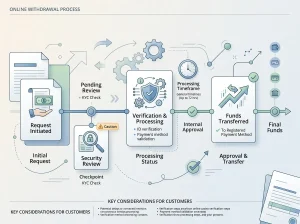
Browser-based play may avoid an app download, but it does not remove the age and identity checks required before gambling.
Playing Without a Download Does Not Remove the Checks
A slot that opens in a browser avoids installing a dedicated app. That is a change in how the game is delivered, not a change in the conditions for gambling. The same distinction applies to three-reel slots, five-reel titles and video slots: the reel layout or presentation does not determine whether a person may play for money.
“Online casino no download” can describe a site that runs through a browser rather than a downloaded program. “No registration” may appear beside it as a separate claim about account access. Neither phrase, by itself, establishes that real-money play can start without the required checks. Convenience at the software layer does not remove the eligibility layer.
For remote gambling in Great Britain, businesses must establish a customer’s age and identity before that customer gambles. Age must also be checked before funds can be deposited into a gambling account. These requirements apply whether the game is launched from an app or directly from a web page. A browser window is not an exception to the rules.
That matters because the first screen can make two different activities look similar. A game may be available to view or try without an app, while gambling with money involves additional conditions. The fact that a slot loads, displays its reels or offers a play button does not show that a customer has passed the checks required for real-money gambling. Technical access and permission to gamble are separate questions.
A free-play version and a real-money game should not be treated as interchangeable merely because they share a title or visual design. The word “free” can refer to a demonstration mode, but it does not establish what the game allows, what happens to any balance, or whether an account is needed. Those details depend on the specific site and its terms. The reliable distinction is narrower: browser access concerns delivery; gambling eligibility concerns whether play for money may take place.
The same reasoning applies to searches for casino games without a download or registration. The wording can combine several separate expectations: no installation, no account, immediate access and no checks. Only the first is clearly about software. The rest cannot be inferred from the absence of a download button or from a game opening in a browser.
UK Casinos with No ID Verification: When Checks Happen
In Great Britain, remote gambling businesses must check age and identity before gambling is allowed. Checks may be completed electronically; if those checks do not provide enough information, the operator can request documents. That is compatible with a digital, download-free service. Verification need not depend on installing an app, and avoiding an app does not make verification unnecessary.
There is also a financial step before a first deposit. Remote operators must prompt new customers to set a financial limit before that deposit and provide accessible account-level controls. A site can therefore offer a browser-based route while still requiring account-related steps before money is deposited or gambling begins. “Instant” in a page description should not be read as a promise that those steps disappear.
For a genuinely free browser game, the key question is whether it is only a demonstration or whether it leads into gambling with money. For a real-money slot, the absence of a download does not change the requirement to establish age and identity first. These are different cases, even if a page places them under a single heading or presents them through the same game interface.
The practical value of “no download” is limited but clear: it describes how software reaches the screen. It does not certify an account, remove eligibility checks or authorise gambling. A no-download slot may be easy to open; that is a product-access feature, not a substitute for the conditions that apply before real-money play.
What a No-Registration Casino Claim Can—and Cannot—Establish
“No registration” describes a casino’s stated route into its service. It does not establish who operates the site, which regulator oversees that business, or whether the operator holds permission to offer gambling to people in Great Britain. A short sign-up route, or a claim that no conventional account is needed, is not a substitute for an operating licence.
The distinction is between a website’s presentation and the operator’s legal status. The wording may describe how the site says access works. It cannot, by itself, show that the business is authorised to provide remote gambling in the relevant market. That remains true whether the label appears on a casino homepage, in promotional material or beside a game.
Licensing Status
A claim that no conventional account is needed is not a substitute for an operating licence and does not prove a business is authorised to provide gambling in Great Britain.
The licence attaches to the business
The UK Gambling Commission oversees commercial gambling in Great Britain and is the sole regulator for that activity there. Its remit includes remote gambling offered to consumers in Great Britain. The location of a casino’s key equipment does not remove the requirement: an operator serving this market cannot avoid the relevant rules simply by running its systems elsewhere.
Remote operators that provide gambling facilities to people in Great Britain generally need an operating licence from the Gambling Commission. The licence is permission for a business to conduct specified gambling activity; it is not a badge awarded because a website uses a particular sign-up method. A claim about registration and a claim about authorisation answer different questions.
This also explains why a site’s apparent accessibility should not be treated as evidence of UKGC status. A page can be visible and a game can be presented as available, while the operator’s authorisation remains a separate matter. The visible offer says what the business is presenting. It does not confirm that the business has the required permission to serve Great Britain.
Business licences and personal licences are not interchangeable
The Gambling Commission issues operating licences to businesses and personal licences to individuals involved in operating gambling. These are different forms of authorisation with different holders. A reference to an individual’s licence does not, on its own, establish that the casino business has the operating licence needed for its service.
Likewise, a casino’s use of the word “licensed” is incomplete without identifying the relevant regulator and the licensed entity. A licence issued elsewhere is not the same as a Gambling Commission operating licence for remote gambling offered to consumers in Great Britain. The regulator’s name matters because authorisation is tied to a jurisdiction and to the activity covered by the licence.
Non-UK-Registered Casinos: Licensing and Risks
The same applies to claims about “new no-registration casinos”. Newness does not create an exception to the licensing framework. A recently launched site and a long-running site are assessed against the same basic question: does the business have the required authorisation for the gambling it offers in Great Britain? The age of the brand, the design of its website and the number of steps shown before a game opens do not answer that question.
What the phrase leaves unresolved
A no-registration claim leaves the operator’s regulatory position unresolved. It does not identify the legal business behind the site, confirm that business’s licence, or show that the licence covers the relevant remote gambling. Nor does it demonstrate that the casino is within the Gambling Commission’s oversight merely because it accepts, or appears to accept, visitors from Great Britain.
That is why “no registration casinos UK” is not a meaningful regulatory category. The phrase groups sites by a marketing description, not by a shared licence status. Two casinos can use similar wording while having different operators and different regulatory positions. The label cannot make those positions equivalent.
For the same reason, “online casinos with no registration” should not be read as a class of casinos exempt from ordinary authorisation requirements. The registration claim may concern the way a website describes access; the licence question concerns whether the business is permitted to provide remote gambling to consumers in Great Britain. One cannot be used to infer the other.
Licensing and Labels
- A no-registration claim does not identify the legal business or confirm its licence.
- The phrase is a marketing description, not a shared regulatory category.
- Licensing status is separate from the website’s sign-up method.
The practical test is therefore about the operator, not the label. The relevant issue is whether the business providing the gambling holds the appropriate Gambling Commission operating licence for the activity offered to the Great Britain market. A statement about registration does not prove that it does, and a streamlined access claim does not alter the licensing framework. The wording can describe an offer; it cannot authorise it.
Recommended online casinos
- JetsetspinsBonus: 200% Bonus + 100 Free Spins + Free Royal Wheel · Payout speed: 1-3 business days
- SlotoSportBonus: 500% up to £ 10 200+ 777 FS · Payout speed: 1-3 business days
- WinBeastBonus: €5000 + 500 FS + €650 Freebet · Payout speed: 1-3 business days
- DieselwinBonus: Welcome Pack 250% up to £4000 + 200 FS · Payout speed: 1-3 business days
- ChanzeBonus: Slots Welcome Bonus #1 200% up to €500 · Payout speed: 1-3 business days
- NightWinBonus: £900 + 400 free spins · Payout speed: 1-3 business days
- ZombillionBonus: Welcome Pack 250% up to £4000 + 200 FS · Payout speed: 1-3 business days
- AmunbetBonus: Join now and get 450% up to 2,700 GBP + 450 FS · Payout speed: 1-3 business days
Casino Access Without Registration Still Requires Identity Checks
“No registration” can describe a shorter route into a casino account, but it cannot remove the checks attached to gambling in Great Britain. A site may present access as immediate or ask for less information at the outset; that does not establish that a customer is old enough or verify their identity. Those checks remain necessary before a person can deposit or gamble.
The practical distinction is between the sign-up process and KYC. Registration is the account-opening step presented by the operator. KYC is the age and identity assessment required before gambling can take place. A shortened registration flow may affect how the account is created, but it does not replace that assessment. In financial terms, an account that has not passed the required checks is not yet permission to play.
What happens before play
Online gambling businesses in Great Britain must establish a customer’s age and identity before allowing them to gamble. Operators must also check age before accepting a deposit into a gambling account. These are not optional stages that disappear because a page describes its service as a casino with no registration.
British Casinos Not on GamStop: What to Know
The order matters. A customer may see a game or account interface before the operator has completed KYC, but visibility is not the same as eligibility to gamble. The operator must establish the relevant details before play is permitted, and age must be checked before money is deposited. A site’s wording about access does not change those requirements.
For new customers, there is another step tied to the first deposit: the operator must prompt them to set a financial limit before that deposit. The limit is an account control, not a substitute for age or identity checks. The sequence therefore has distinct parts: the operator establishes age and identity, the customer is prompted to set a financial limit before depositing, and gambling can proceed only after the required checks are complete. Calling the route “no registration” does not collapse those separate obligations into one.
Electronic checks and document requests
KYC does not necessarily mean that every customer must begin by sending documents. Identity checks for online gambling customers may be completed electronically. If electronic checks do not provide enough information, the operator can request documents to complete the assessment.
That distinction is useful when assessing claims of effortless access. An electronic check may leave the customer with nothing to upload, while a request for documents may add another step. Neither outcome is evidence that the operator has waived KYC: one is a way to assess information electronically, and the other is a means of obtaining information that remains outstanding.
There is no basis for treating document requests as an exception to the rules. They are part of the available verification process where electronic checks are insufficient. Equally, a promise of a short sign-up cannot establish in advance that no documents will be needed. The outcome depends on whether the checks provide enough information for the operator to establish age and identity.
Do
- Complete age and identity checks before gambling
- Prompt new customers to set a financial limit before first deposit
- Request documents if electronic checks are insufficient
Don’t
- Assume a short sign-up removes KYC requirements
- Treat visibility of a game as eligibility to gamble
- View document requests as an exception to the rules
What the label leaves unanswered
A claim of no registration does not, by itself, explain which details are requested, whether KYC is completed electronically, or whether documents may be needed. It describes the access proposition, not the result of an individual customer’s checks. Without those distinctions, “no registration” can make the route sound more complete than it is.
For someone comparing an online casino with no registration, the relevant practical question is not simply whether an account form looks brief. It is whether the operator completes the required checks before allowing a deposit or play, and what happens if an electronic assessment is insufficient. The wording on an entry page cannot answer that for every customer.
The same applies to searches for the best no-registration casino. A shorter sign-up is not a measure of whether KYC has been completed, and it does not establish that a person is eligible to gamble. The check is not a barrier that a better label can remove; it is a condition of access to gambling.
A no-registration casino in the UK, then, should be understood as a claim about how account access is presented—not as an exemption from age and identity assessment. Electronic checks may complete KYC without a document request, but the operator can ask for documents if those checks are not sufficient. Until age and identity have been established, access to a page or game is only access to the interface.
Online Casino Sister Sites in the UK: How to Check
Reading the ‘No Registration’ Label Against the Licence Record
A “no registration” label describes a claimed route into a casino, not the status of the business behind it. The distinction matters because a brand name on a webpage and a legal entity in a regulator’s register are not necessarily the same name. The useful comparison is between the casino’s stated operator and the entity recorded by the relevant regulator—not between the wording of an offer and the impression it creates.
A specialist review reports that the UK Gambling Commission’s record links 333 Casino to Grace Media (Gibraltar) Limited. That is a specific operator-to-brand connection, rather than proof that every casino using a shortened or familiar trading name appears in the register under that same name. It also does not make “no registration” a licensing category. The record answers an operator-identification question; the label describes an access claim.
The reverse problem appears with Hustles Casino. A specialist review reports that a check of the Gambling Commission business register found no operating-licence entry for either Hustles Casino or Usoftgaming N.V. The absence of a result under those names should be read narrowly: the reported check did not locate an entry for them. It is not evidence that the casino’s registration wording has been independently validated, nor does it turn another regulator’s record into a UK Gambling Commission authorisation.
That distinction is visible in the separate Curaçao record. A specialist review reports that the Curaçao Gaming Authority lists Usoftgaming N.V. with active B2C licence CGA/2025/1353/1345. This identifies a licence shown by that authority. It does not establish that the same company holds an operating licence from the Gambling Commission. A licence record has a regulator attached to it; leaving out the regulator changes what the record proves.
Regulatory Verification
Verification requires identifying the legal operator and the specific regulator’s record; a foreign B2C entry is not interchangeable with a UK Gambling Commission operating licence.
For remote gambling offered to consumers in Great Britain, the relevant check is the Gambling Commission’s operating-licence record. A foreign licence entry and a UKGC entry are not interchangeable, even where the company name matches. The operator’s location does not remove that distinction. Nor does a casino’s claim that an account can be opened with fewer steps alter which register is relevant to authorisation.
Names require care as well. A search for a brand can miss an entry filed under its operator, while a search for an operator can return a company that is not the entity named in the site’s terms. The 333 Casino–Grace Media link illustrates why the legal entity matters. In the Hustles example, the reported check names both the casino and Usoftgaming N.V., but reports no operating-licence entry for either. The result should be recorded in those terms, not expanded into a claim about every company with a similar name.
The records also have limits in time. A register entry is a statement of what a regulator’s record displays when checked, not a permanent guarantee about a brand or its ownership. For that reason, a no-registration claim and a licence claim should be treated as separate pieces of information: one concerns how access is described, the other concerns whether the identified operator appears in the applicable register.
This is a deliberately small test. Identify the legal operator, identify which regulator’s record is being cited, then compare the names and the licence type. If the only evidence is an overseas B2C entry, it establishes an overseas record. If a reported UKGC register check finds no operating-licence entry for the named casino or company, that check does not support treating a no-registration label as evidence of UK authorisation.
Casino sites not on GamStop UK: rules and risks
Casino Games Without Registration: Access Is Not the Same as Eligibility
A casino game displayed in a browser is not necessarily available for real-money play. A site may present a preview or free-play mode without asking for account details, but that describes how the game can be opened, not whether a person is eligible to gamble or whether the operator may lawfully offer gambling in Great Britain.
The distinction is between access to a game interface and participation in gambling. In a free-play version, the result has no real-money stake or gambling balance attached. It can show how a game works, but it does not establish that the same game can be played for money without an account, checks or other conditions. “No registration” may describe the first screen, rather than the full route to real-money play.
For real-money casino games, the legal position is not changed by the way a site labels its access. Remote gambling operators serving consumers in Great Britain need the relevant UK Gambling Commission operating licence, wherever their key equipment is located. Online gambling is legal only through sites holding the required authorisation. A game being visible without a sign-up form is not evidence of that status.
Nor does the absence of an account form make a person eligible to gamble. In Great Britain, remote gambling businesses must establish a customer’s age and identity before gambling can take place. That applies to casino games generally, not just slots. A site cannot turn a game preview into permission for real-money play by describing it as instant, free or registration-free.
Legal Gambling
Remote gambling is legal in Great Britain only through sites holding the required UK Gambling Commission authorisation.
The same separation matters when a page uses “free” to describe games. Free access to a demonstration is not the same as a no-deposit offer, and neither phrase proves that real-money play is available without KYC. Once gambling is involved, the operator’s obligations apply. Customers must be at least 18, and the operator must complete the required checks before allowing gambling.
A practical reading of the wording is therefore narrow: it may indicate that a visitor can reach some game content without first creating an account. It does not establish that every casino game on the site is available in that way, that winnings can be withdrawn, or that real-money play is permitted before checks. Those are separate questions, not details implied by the label.
The financial-control stage is separate too. A UKGC licensee must prompt new customers to set a financial limit before their first deposit and provide account-level controls. That requirement does not convert free-play access into gambling access; it applies when the customer proceeds towards depositing and playing for money.
For casino games without registration, the meaningful distinction is thus between viewing or trying a game in a non-gambling mode and placing real-money stakes. The first may be a matter of site design. The second requires an authorised operator and completed eligibility checks. A short route to a game is not a short route around those conditions.
Casino Websites and the Details Behind a No-Registration Offer
A casino website’s “no registration” wording needs to be read alongside the offer terms. It may describe a shorter route into the site, a particular promotion, or a claim about when an account is needed. Those are different propositions. The label alone does not establish that a bonus can be claimed without signing up, or that every visitor qualifies.
Online Casino Malta MGA Licence in the UK: What It Means
That distinction matters for a no-registration casino bonus. A specialist casino review describes no-deposit slot bonuses as offers for new users who register at qualifying sites; in some cases, a promo code is also required. In that account, “no deposit” describes the payment condition for the offer, not necessarily the account condition. Registration and a deposit are separate steps, and the wording of one should not be read as a promise about the other.
A different specialist review describes operators crediting free spins or a small bonus automatically, without card details or a deposit being needed to trigger the credit. This is a description of an offer mechanism, not a general rule for casino websites. The published terms determine whether that mechanism applies to a particular promotion. A headline saying “no registration” does not supply those terms.
The practical check is to compare the banner with the offer’s own conditions: who is eligible, whether an account must be created, whether a code is needed, and what action triggers the credit. If those details are not stated clearly, the headline cannot settle them. The amount displayed as a bonus, if any, is also not the same as a withdrawable balance; the terms govern what the credit can be used for and whether further conditions apply.
For a UK-facing site, promotional wording does not replace the requirements governing remote gambling. In Great Britain, a UKGC licensee must establish a customer’s age and identity before gambling can take place. “No registration” therefore cannot be treated as permission to bypass the required checks.
Bonus Condition Checks
Compare the offer banner with the specific terms to determine:
- Who is eligible for the promotion
- Whether an account must be created
- If a promo code is required
- What specific action triggers the bonus credit
A useful reading separates three questions: is the claim about creating an account, about paying in, or about receiving a promotional credit? A site may use similar wording for each, but the consequences differ. The offer page and its conditions—not the short label—show which step is waived and which remains.
That leaves the bonus itself to be assessed on its mechanics: how spins or credit are issued, whether a later deposit changes the offer, and what conditions apply before winnings can be withdrawn.
No-Deposit Bonuses: The Spins, the Deposit Trigger and the Wagering
A no-deposit slot offer is not necessarily a no-registration offer. A specialist review describes these bonuses as being issued to new users when they register at a qualifying casino, with a promo code sometimes required. The distinction is practical: no initial payment may be needed to qualify, while creating an account and entering the correct code may still be part of the offer.
The same review describes a staged structure: an initial batch of free spins, followed by additional spins after a first deposit and wagering. It puts the initial cap at around 50 to 60 spins, but that figure belongs to the offer described by the review, not a fixed market standard. The relevant amount for any particular promotion is the amount in its current terms.
The deposit trigger changes the cost calculation. Spins described as no-deposit may apply only to the first part of an offer; unlocking a later batch can require money to be added to the account. That later benefit is therefore conditional, not an extension of the original no-deposit entitlement. The deposit requirement and any wagering attached to it need to be assessed together before the offer is treated as worthwhile.
Casinos Not on GamStop UK: Trust, Access and Risks
Wagering conditions determine what must happen before bonus winnings can be withdrawn. The terms should be checked for which funds count, which games contribute and whether the requirement applies to winnings or bonus funds. A spin count alone does not establish the cash value of an offer: the deposit trigger and wagering conditions can materially change the result.
Before any first deposit, a new customer must be prompted to set a financial limit. That control is separate from the bonus calculation. A promotion does not alter the requirement for age and identity checks before gambling, nor does “no registration” wording establish that a site is authorised to serve Great Britain.
The useful comparison is therefore not simply how many spins appear in the headline. It is whether registration is required, whether a code must be entered, what triggers the next batch, and what wagering applies before withdrawal. If any of those terms are unclear, the headline spin total cannot provide a reliable measure of the offer.
Instant-Play Slots Without Registration: What ‘Instant’ Leaves Out
“Instant play” describes how a slot is opened, not whether a person is eligible to gamble. A game may appear in a browser without a separate installation step, but that says nothing about the checks required before real-money play. The word “instant” belongs to access; it does not shorten the operator’s obligations.
For remote gambling in Great Britain, the operator must establish a customer’s age and identity before gambling can take place. Those checks may be electronic. If they do not provide enough information, the operator can request documents. An abbreviated sign-up route or a page that opens quickly does not change that sequence.
Attention: The term "instant play" refers to software delivery and does not shorten the operator’s legal obligations to establish a customer’s age and identity.
The same distinction applies to searches for free classic slots or instant-play games without registration. A game presented for free play is not, by that description alone, permission to stake money. Any transition from a free version to real-money play is a separate point at which eligibility requirements matter. “Free” and “instant” describe different features; neither establishes that checks have been completed.
A useful reading of an instant-play casino claim is therefore narrow: it may refer to the way the game is accessed, but it cannot establish that the operator may offer gambling to customers in Great Britain or that a customer has passed the required checks. The Gambling Commission’s rules attach to the gambling activity, not to how quickly a screen loads.
Before a first deposit, a remote operator must also prompt a new customer to set a financial limit. A fast route to a game does not remove that step. In accounting terms, speed changes the route, not the conditions attached to the transaction.
Free Spins Without Registration: Check What Actually Triggers Them
“Free spins” describes what an offer awards, not necessarily how a player qualifies for it. A slot may be presented as available without registration, while spins attached to a casino promotion are issued only after the offer’s stated conditions are met. For some no-deposit offers, registration is the qualifying step; a promo code may also be required.
A specialist review describes a different arrangement in which an operator credits spins or a small bonus automatically, without card details or a deposit triggering the award. That is a reported offer mechanism, not a standard feature of free-spin promotions. The practical distinction is the trigger: automatic credit, account registration, or entry of a code. The word “free” does not identify which one applies.
The offer terms determine whether the spins are available immediately, whether they are tied to a qualifying promotion, and what happens to any winnings. Those details should be checked before treating an advertised spin as usable value. Where the offer is a no-deposit slot promotion, it should be from a UKGC licensee; an appealing label does not establish the operator’s authorisation.
Non-UK-Regulated Casinos: Rules for UK Players
Nor does receiving spins establish eligibility to gamble. In Great Britain, online gambling businesses must establish a customer’s age and identity before gambling takes place. A promotion can therefore be described as registration-free while access to real-money play remains subject to the required checks. The distinction is commercial, not regulatory: the trigger may vary, but the label does not remove the conditions for gambling.
Pay N Play and the Limits of ‘No Registration’
Pay N Play describes an access or payment claim; it does not establish that a casino can accept gambling without first identifying the customer. In Great Britain, remote gambling businesses must establish age and identity before a customer can gamble. A shorter-looking route does not change that requirement.
KYC may be completed electronically. If those checks do not provide enough information, the operator can request documents. The practical distinction is between how details are collected and whether the required checks have been completed. A payment method or automated process cannot, by itself, prove that a customer is eligible to play.
The same applies to deposits. Operators must verify age before allowing funds to be deposited into a gambling account. New customers must also be prompted to set a financial limit before their first deposit. “No registration” wording does not remove either step; it may describe the route into an account, but not permission to gamble.
A Pay N Play casino serving Great Britain still falls within the remote-gambling framework. The relevant question is not whether its sign-up screen looks brief, but whether the operator completes the required checks before deposit and play. Where electronic KYC is insufficient, document requests can add a further step. That is not a contradiction in the offer: access can be streamlined while eligibility remains conditional.
The label is therefore a description of a claimed process, not proof that registration, KYC or regulatory obligations have disappeared. A payment shortcut is still a route, not an exemption.
How do no-deposit slot bonuses work?
Qualifying casinos may award new users free spins or a small bonus when they register, sometimes after entering a promo code. The bonus can be credited without card details or a deposit to trigger it.
Can I play before 333 Casino verifies my identity?
No. In Great Britain, an online gambling operator must establish your age and identity before you gamble; electronic checks may be used, with documents requested if needed.
How can you tell if an online casino is licensed and legal in the UK?
Check the Gambling Commission’s business register for the operator’s required operating licence. A casino’s claims about registration or access do not establish that it is authorised to offer gambling in Great Britain.
Who operates Hustles Casino, and which licence applies?
Usoftgaming N.V. is associated with an active Curaçao Gaming Authority B2C licence, CGA/2025/1353/1345. The Gambling Commission’s business register has no operating-licence entry for Usoftgaming N.V. or Hustles Casino.
Created by the "Dreams Casino UK Guide" editorial team.